S2:E349 – Who Framed Roger Rabbit? and Prejudice (Coyote vs. Acme)
We're just drawn that way
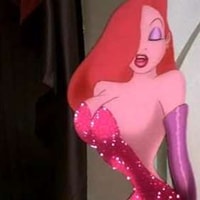
Transcript
I'm as mad as hell, and I'm not gonna take this anymore!
Speaker B:So you lie to yourself to be happy.
Speaker C:There's nothing wrong with that.
Speaker B:We all do it.
Speaker D:We all go a little mad sometimes.
Speaker B:Come on, if one of you nuts has got any guts—
Speaker A:Let's put a smile on that face.
Speaker C:You're only as healthy as you feel.
Speaker A:Listen to me!
Speaker C:Listen to you?
Speaker A:By what right? Because I have a right to be here! And I have a voice!
Speaker D:Ladies and gentlemen, welcome to Pop Culture Case Study.
Speaker C:Yeah, let's do it.
Speaker B:I'm pumped.
Speaker A:Let's let the healing begin.
Speaker B:Welcome to Pop Culture Case Study, where we analyze pop culture from a psychological angle. I'm your host, Dave. I'm here with my co-host, Will, and I have an announcement to make. This is the last official episode of Pop Culture Case Study. Now, for those of you who have been there since the beginning, thank you. I love you. It doesn't mean you're going to stop hearing my voice, for better or worse. Will and I will be continuing to podcast. We're just gonna do something a little bit different. And if I'm being totally real, a lot of this is because I've been doing the same podcast for so long, over 400 episodes. And one of the things that happens is, believe it or not, you start to run out of psychological themes after 400 or so episodes. And also, if I'm being extra real, It's a lot of work. It's about 2 or 3 hours of research plus an hour of recording and editing. So that's a lot, 4 hours every single week. And that's before we record the episode. So we're talking 5, 6, 7 hours a week doing these podcasts. It's a lot of work, but—
Speaker C:And then you have to edit out all the bullshit that I say.
Speaker B:Just like this, that's never gonna see the light of day.
Speaker C:Exactly.
Speaker B:So we are gonna be doing something a little bit different. There will be an announcement coming soon. I will also probably be doing kind of a little goodbye short episode on my own. But relatively soon, Will and I will be doing a totally different podcast, but it will be on this feed. So you will not have to resubscribe or look for it. I will also be doing another side podcast, which will be on a different feed. I will be doing a, finally, a Rose Byrne podcast. It is called Burning for You. I'll be going through her entire filmography and maybe continuing until the day she retires. We'll just keep doing episodes of that. So keep, keep an eye out for that. I will be doing some work on that as well. But that does not mean we are not going to do a full episode today. Today, well, ACME vs. Coyote is finally coming out, a movie that seems to only be coming out because people were really mad that it wasn't coming out. So this is, of course, a movie that has both animation and live action. So I felt like almost like I had no choice but to do Who Framed Roger Rabbit. So we are taking Who Framed Roger Rabbit and Prejudice. So, Will, what are your feelings on these, these nonsense cartoons and people being really upset about them online and ACME versus Coyote? How are you feeling about this one?
Speaker C:Well, 2 quick things first. One, it's Coyote versus ACME. So apparently the hours and hours of research that you put into this podcast are just going Right in one ear, out the other.
Speaker B:Right out the window.
Speaker C:Um, but in all seriousness, your commitment to this podcast is, has been, and remains, and just to podcasting and talking about the thing you love in general, is something that has inspired me since I've gotten to know you. And for you to be continuing to spread your wings in, in this game, but in a different direction after 400+ episodes of this podcast is just It's remarkable. Both, both sides of it are remarkable. You've done great work with this. And I, I would like to say, just for me, I can't speak for others, but I'm sure I can, or I'm sure I am. You've helped a lot of people understand certain things that they may be going through with this podcast as well.
Speaker B:Appreciate that, man.
Speaker C:Because not everybody can necessarily contextualize the things that they're feeling or going through psychologically. And for me, a lot of that work has been done through film. Whether that's healthy or not is not for me to decide.
Speaker B:And frankly, I'm sure it's fine.
Speaker C:No worries. Plenty of other places to go to work on that shit. But, um, you are a gem.
Speaker B:So thanks, man. I'm proud of you. Appreciate that.
Speaker C:Appreciate that. And, uh, so I don't know if he'll edit that out. If you're listening to this, we're, we're good.
Speaker B:But he— a compliment? I'm never editing that out.
Speaker C:That's fair. But you are very— yes, you are notoriously very good at taking compliments.
Speaker B:comments.
Speaker C:Um, but, uh, in any case, the original question I believe was about these silly cartoons and people getting mad at them online. Um, I'm very excited for this movie, but it's been a very long time since it was announced, so I fear a little bit that the excitement that came after the outrage of Warner Brothers shelving this and basically being like, we are either going to delete this from existence or sell it off. And then finally they did sell it off to, you guessed it, Ketchup Entertainment.
Speaker B:Obviously, as we all know and love.
Speaker C:Of course. And, uh, yeah, I'm glad that they did. I just hope that people go out of their way to put their money where their mouth was when this was on the verge of being canceled, because I've been very— I've been very excited since it was announced. I think— I mean, We'll get to it, but Who Framed Roger Rabbit is a delightful motion picture, and anybody even trying to create something in the vein of that, I am— I'm down for, because if you do it right, it is— it, it could be a smash hit. So will it be for Ketchup Entertainment? It'll probably be their highest grossing movie of all time because it, it involves the Looney Tunes and multiple—
Speaker B:More than The Day They Met the Grinch.
Speaker C:Very famous people. I think so. But yeah, I'm looking forward to it. I'm hoping that if nothing else, it's just a really fun time.
Speaker B:Yeah, I, you know, all jokes aside and all of my title mistakes aside, I'm a little bit excited for this movie. And you know what? If, if you had asked me this question before I had rewatched Who Framed Roger Rabbit, I feel like I might have a slightly different answer. But rewatching that classic of the form, and I say that not as a joke, but truly watching that, I kind of got excited about seeing what can be done with this kind of hybrid animation live action. Because, you know, obviously it's been a long time since Who Framed Roger Rabbit. So I'm sure the technology is better, but it remains to be seen if the charm is still there.
Speaker D:Mm-hmm.
Speaker B:And I think one of the things that makes Roger Rabbit really interesting is that it's about the past, so that's something that you don't have to worry about making topical. And I wonder if this new movie, if it tries really hard to be modern and topical. And like you said, with this giant delay, it's like watching a— it's like a scary movie coming out like 5 years after it's been filmed, and you're like, uh, yeah, that would have been funny back then, but I don't know. So I'm interested to see how they do. It's got an interesting cast: Will Forte, Lana Condor, uh, John Cena. Luis Guzmán. I mean, there's a lot of really interesting people in this movie, people I really like seeing on screen. And you know what, I grew up on, you know, the Road Runner and Wile E. Coyote. Those are some of my favorites. So it'll be very easy for me to get hit by nostalgia. Um, I don't know much about Dave Green, who, uh, who directed this, um, but we'll see. But Sammy Birch wrote the screenplay, who also wrote Made in December, which is really crazy. Like, that is not a name I would Well, yeah, and Late Fame, a movie I just reviewed and enjoyed quite a bit. But if you had told me the same person did May December, Late Fame, and Coyote vs.
Speaker C:Acme, I'm not sure I would have pulled that.
Speaker B:But, you know, good for Sammi Burch. I'm really happy that she's continuing to get work. So I'm—
Speaker C:You know who has a co-story credit on this?
Speaker A:Who?
Speaker C:James Gunn.
Speaker B:Oh, yeah, yeah. I know he produced, so that's not— that's not too much of a surprise. But yeah, we'll see how it goes. I'm coming in with an open mind. I'm a little bit excited about this. I'm, you know, it'll be fun. You know, how can a Coyote movie not be fun? How can a Wile E. Coyote movie not be fun? That's— it'll be interesting to see which, which take they go with, because there's definitely the original Wile E. Coyote, and then there's the later with the, like, super genius voice and all that. So I wonder which direction they're going. So I'm excited to see this. Maybe not as excited as I am to rewatch Who Framed Roger Rabbit, but still a little bit excited. All right. So strangely, I think it's actually pretty great that the last episode is on Who Framed Roger Rabbit, because one of the ideas of the show was that you can take a look psychologically at movies and not just the movies that you would think, like a Good Will Hunting or a One Flew Over the Cuckoo's Nest, but even movies that are relatively silly, like a—
Speaker D:Right.
Speaker B:Almost Chinatown ripoff involving cartoons. we can still take a look at psychology in that. So we're taking a look at prejudice. So obviously a lot of options as far as movies about prejudice. I mean, it's a pretty well-worn topic. So what is your movie of choice for prejudice?
Speaker C:Yeah, it's funny. Well, it's funny that you can apply prejudice to Who Framed Roger Rabbit, but I'm not sure that our triple feature is going to have the same sort of silliness. It'll be weird, man.
Speaker B:Yeah, it's going to be a weird one. Little funny racism.
Speaker A:Yeah, it's just—
Speaker B:yeah, I really love that.
Speaker C:I'm just gonna go with the immediate gut from my list because, I mean, it's Killers from the Flower— Killers of the Flower Moon.
Speaker B:Definitely on my list.
Speaker D:Yes.
Speaker C:Yeah. Like, I— we've talked recently about feeling like we sometimes neglect newer films as we look way back into the history of this theme and films that surround it. And I mean, this is just one of the best films of the 2020s and even of the 2000s. It's just an absolute totemic triumph of a movie, of an adaptation from Scorsese, obviously about Mollie Burkhart, a member of the Osage Nation, and the, you know, dastardly white men who come in and try to take their oil, the Osage Nation's oil that's found on their land. And, you know, I mean, incredible book, one of my favorites, genuinely, genuinely an amazing read. And then to see it adapted the way that it was by Scorsese is— yeah, I can't say enough about it. And yet I'm struggling to come up with the words because I just think this movie is so, so great.
Speaker A:Yeah. Yep.
Speaker C:I remember the trailers coming out and just being like, man, I hope they don't fuck this up. And it could not have been better. Yeah.
Speaker B:I mean, all the right choices got made, like the way they changed, like, the perspective.
Speaker C:Exactly.
Speaker B:It's just—
Speaker C:it's—
Speaker A:Yeah.
Speaker C:I mean, he nailed it. He nailed it. Because what Dave is talking about, if people don't know, is the book is from the perspective or told through the lens of the investigation conducted by Jesse Plemons' character in the film, Tom White. And who's— who is the investigator assigned to the case of all of these murders that are happening in the Osage Nation in this community? Because there's just strings, a string of them on top of one another. If you haven't seen Killers of the Flower Moon, I don't know what you're doing, but I don't know, maybe you just didn't have 4 hours to set aside.
Speaker B:It's not quite 4, but it's— It's not quite—
Speaker C:it's 3 and a half. And also, I'm not saying—
Speaker A:I—
Speaker C:that sounded like I was saying it in jest. Get over yourself. Watch the movie. It's worthwhile.
Speaker B:Especially now that it's available at home. Like, you can watch it in chunks if need be. Like, I saw this movie twice in the theaters, and I would have seen it a third time if it was still playing. Like, I just think it's— it's, you know, the phrase phenomenal or perfect movie is certainly overused. We throw it around. But Scorsese is a genius and has been for many, many years and just continues to keep putting out films that are going to last for decades and decades in the cultural brain. And it has a couple of the best performances of the past 5 or 6 years. It's a great DiCaprio performance.
Speaker D:It really is.
Speaker B:I mean, I don't know that I would have called Leonardo DiCaprio plays a good dumb guy. He's an idiot. He's not a genius. He's not some, like, you know, a lot of times racists are painted in this way of like, oh, they're dastardly and manipulative and this and that. And he's not that necessarily. Like, he does manipulate, but it's not like he's a master manipulator in that movie.
Speaker A:No, he's not.
Speaker B:He just does the next thing and gets away with it cuz he's a white guy. Like, that's exactly—
Speaker A:yeah, exactly.
Speaker B:Just a tremendous movie.
Speaker C:And is it— yeah, it's funny because like you see, well, I wanna move on to your pick, but I, I could talk about this movie forever, and it's not the movie we're talking about today. But the fact that he goes from this to, I believe his next performance is One Battle After Another, a dumbish guy in a different way. Like, it's— maybe this is just what he was born to do. I don't know exactly the tone of What Happens at Night, Scorsese's next film. I don't think it's quite in the One Battle After Another zone, probably a little darker. Despite reports that PTA worked on it yet again.
Speaker B:God bless.
Speaker C:So yeah, we'll see. I mean, but Leo and I should also— Lily Gladstone. I mean, I—
Speaker A:Yeah. Yep. Yep.
Speaker B:Truly impeccable performance. Like, really, really excellent. I'm going to go— Killers of the Flower Moon was also on my list. Surprise, surprise. A Scorsese movie made Dave's list. I'm going to go the exact other direction. Right? You went with a relatively recent and pretty serious awards-heavy movie. Given that we have both just seen and enjoyed a comic book movie, Spider-Man: Brand New Day—
Speaker C:Yeah.
Speaker B:I'm going to go that route. I'm going to go X-Men: Days of Future Past. That's going to be my prejudice. Really, you could pick any X-Men movie, but I wanted to pick one that wasn't directed by, like, a sex pest. So I'm going to go with X-Men: Days of Future Past. And that also kind of takes into account this, like, you know, the whole Sentinels aspect and, you know, the mutants being picked off one by one and imprisoned because of who they are. You know, it's been detailed. If you're not even a comic books fan, but if you know anything about the X-Men, you know it is a pretty obvious parallel to race relations in the United States. You could definitely make even more parallels to, you know, Professor X as Martin Luther King and Magneto as Malcolm X. Like, there's a very clear line there.
Speaker D:Yeah.
Speaker B:So that is my pick, is Days of Future Past, which is, I think, other than Logan, probably the best Hugh Jackman performance in any of the X-Men movies. A really enjoyable performance there. And it's a movie I go back to, a movie I covered many moons ago on this very podcast.
Speaker C:Nice.
Speaker B:With a friend of mine, Darryl Mansell, who is a great podcaster and a huge comic books fan who hates Days of Future Past. It was a very interesting conversation for sure. But what else do you have on your list, Will? What, what other prejudice movies came up for you?
Speaker C:I could have included, as you said, any of the X-Men films. And I think I'm due for a rewatch, especially now that they're starting to wade into the X-Men waters in the Marvel Cinematic Universe. But they aren't on my list. What I included, I'll rattle them off as quick as I am able, which is not often that quick. Parasite by Bong Joon-ho, a classic of this form.
Speaker B:Another one we covered on this podcast.
Speaker C:Another one we covered.
Speaker A:Yeah.
Speaker C:A, a movie that's been on my mind recently because of the announcement that— surprise— Ava DuVernay has a sequel of sorts to her, her documentary, the one I'm mentioning, 13th.
Speaker B:Such a good pick. Didn't think of it, but really incredible work.
Speaker C:It's one of the best documentaries of the 2000s for, for sure. And just a vital work of cinema.
Speaker B:As someone who feels like I know a fair amount about this stuff, like, there was some— there are some things in that documentary that left my jaw on the floor with just how— just how deeply racist this country is. Truly.
Speaker C:I mean, it's sickening.
Speaker B:Oh, yikes. Yeah, it's— but it's really, really—
Speaker D:everyone should watch it. Truly.
Speaker C:Yeah, you should. And the sequel of sorts that I was referring to is 14th, which is world premiering as the closing night film at this year's New York Film Festival. So I'm very excited for that in the wake of 13th. Excited feels like the wrong word, but you know what I mean?
Speaker A:Yeah.
Speaker C:12 Angry Men, a movie we've talked about 1,000 times.
Speaker B:It's the only reason it's not on my list. I was like, yeah, okay, we've done this.
Speaker C:I'll rattle off a few of the others that I feel like are talked about all the time. Get Out, Malcolm X, Do the Right Thing, and pretty much anything Spike Lee has ever made. Pretty much anything that Jordan Peele has made in the last couple of years. But the other ones that I felt like were a little more interesting— Yorgos Lanthimos' The Lobster.
Speaker B:Oh yeah, yeah, interesting. Good pick.
Speaker C:Which is a movie set in a dystopian society where single people have to get into a relationship within 45 days or they get turned into an animal.
Speaker B:It might be my favorite of his movies, by the way. I really like The Lobster a lot.
Speaker C:Might be mine too. I mean, it's really, really great. Um, you know, at a time when there is a really not great movie about single people and what they do when they are, you know, are given free will for 24 hours.
Speaker B:Is what you're referencing?
Speaker C:That's what I'm referencing. I think just go see— watch The Lobster instead. Not the same movie by any means, but come on. Um, Andrew Niccol's Gattaca. I don't know how you feel about this movie.
Speaker B:Oh, I love this movie. Yeah, I've covered it on the podcast. I think I've actually recommended it a couple times. I, I think it's wildly underrated. I think, I think it's legitimately like a sci-fi classic. I think it's tremendous.
Speaker C:Yeah, a debut feature as well, which is crazy.
Speaker B:You know, for a debut, it's pretty good.
Speaker C:Pretty good for a debut. Douglas Sirk's All That Heaven Allows, about social complications that come up between a young poor man and a well-off widow who get into a romantic relationship. Real quick, last couple. Killer of Sheep, Charles Burnett, just one of the best ever. Shaka King's Judas and the Black Messiah, kind of in a similar vein of like historical racism and prejudice that is told in Killers of the Flower Moon, but I think a more energetic film by all accounts. And then one of my favorite, favorite, favorite movies to recommend to people that not enough people have seen somehow. If Beale Street Could Talk, Barry Jenkins.
Speaker B:There's a lot of people on that list. It's a very underseen, beautiful movie.
Speaker A:Yeah.
Speaker D:Yeah.
Speaker C:What about you? What didn't I mention?
Speaker A:All right.
Speaker B:So since you mentioned All That Heaven Allows, what about Far from Heaven? What about the Todd Haynes version of that movie?
Speaker C:Also good.
Speaker B:Just a beautifully composed film. Like, I love it. On the other end of the spectrum, Prey, the Predator movie, which is kind of sort of about colonialism as well. Children of Men, which I just thought about recently because it's coming up on an anniversary. God, I think both of us watched this relatively recently. It's a great movie. Whether you've seen Children of Men or not, you should watch it. You should watch it again if you've seen it, and if you haven't seen it, you should experience this for the first time and understand how great filmmaking can really be. Like, just a really incredible film. A movie I, I think I liked a lot more on release than I do now, but I think it's still very impressive. That's American History X. That was a movie I was like, oh my God, like, just the greatest movie ever made. I don't think it's that, but, but I do think Edward Norton gives a performance for the ages and one that is deeply difficult to watch. It is a movie that, it's one of the few movies that makes me turn my head away from the screen. If you've seen the movie, you know what scene I am talking about, so we don't have to go into that. How about Blindspotting? Did you see that movie?
Speaker C:Well, a couple years ago?
Speaker B:Yeah, really, really enjoyable movie. Also, it has a very deep place in my heart because it is a very Bay Area movie. It's a very Oakland movie. Yeah, that one really works for me. Also, on the other end of the spectrum, how about District 9? If you want to go science fiction, it is deeply unsubtle. It's very obvious that this movie is about prejudice. It is not pulling its punches. It's a movie that I think a lot of people hate on now because the director sucks, and he does. He's using AI now, so he does suck. But that's pretty good.
Speaker C:Camp?
Speaker B:Yeah, yep. Neil Blomkamp. Yep. And then the last 2 are a little bit more standard. Jeff Nichols' Loving.
Speaker C:Yeah, I knew you were gonna pick this. I didn't put it on the list for that.
Speaker B:I mean, Nichols, I mean, you know it's gonna come up. And the other one features a performance that legitimately is one of the best single performances I have ever seen on film, and that is Till.
Speaker C:I almost put this.
Speaker D:Yeah.
Speaker C:Oh yeah, no, truly.
Speaker B:Yeah, it's, uh, I mean, talk about difficult to watch, uh, that is definitely up there. I mean, for those that don't know, who didn't cover this in history class, Emmett Till was a young Black boy who was ruthlessly murdered by white racists, and, um, his mother made the choice to have, um, an open casket funeral so everyone could see what these men did to this boy. And Danielle Deadwyler plays that woman, Mamie Till Mobley, and it's a performance so good it's hard to describe.
Speaker C:Mm-hmm.
Speaker B:And she is an actress that now whenever I see her in anything, I'm excited. And I've never been let down by a performance of her, even when she's in, like, comedies. Like, she's in the TV show Rooster, And she's wonderfully charming in that show. And I was just like, I just love watching her. And she's gonna be in the new X-Files that's produced by Ryan Coogler. I could not be more excited about that simply because I've heard—
Speaker C:Is that directed by Coogler?
Speaker B:I think the pilot is directed by Coogler and it's still to be determined if they're just gonna play that as a film or if they're gonna make that into a running series. So yeah, Till, definitely not an easy watch. much like American History X, but I think a worthwhile watch. I almost picked it as my, you know, my number one recommendation. It's really, really excellent. And you want to talk about actors that have been robbed as far as awards?
Speaker C:Oh, my God.
Speaker B:Daniel Deadwyler in Till. It's kind of embarrassing because I truly do believe it is like— it's, it's on the level of, um, The Passion of Joan of Arc. It's on the level of Woman Under the Influence. Like, it is that Good, and yeah, you're not. So few people saw it, and everyone should.
Speaker C:You're not. You're not kidding. I mean, it's the director Chinonye Chukwu. I hope I'm pronouncing that correctly. She is best known. I believe these are kind of her two main major releases for Till and Clemency, which I think you could also throw under this category. And Clemency also.
Speaker D:Also a great lead performance.
Speaker C:A tremendous lead performance from Alfie Woodard. Like, yep, what a director of actors.
Speaker B:But yeah, I mean, also a little bit of, a little bit of Dave trivia. Clemency was the first movie that I ever reviewed at In Session Film.
Speaker C:No shit.
Speaker D:Yes.
Speaker A:Wow.
Speaker B:All the way back in 2019. That feels like 100 years ago. Uh, but yes, a really, really great lead performance there from Alfie Woodard. Surprise, surprise, one of our best actors gives yet another great performance. Yes, but yeah, lots of good options. We could go on, I'm sure, for an hour just on movies about prejudice because, you know, believe it or not, America got kind of a problem with prejudice. Don't know if you knew, uh, but not the greatest when it comes to equal treatment in this country.
Speaker C:I didn't pick up on that when you said if you didn't learn about Emmett Till in school.
Speaker B:Yeah, a lot of people do have a problem.
Speaker D:We have it.
Speaker C:No, I know. I remember being sickly sarcastic.
Speaker B:Like, yeah, this is the thing that blew my mind because I knew about Emmett Till because I took an African American history course in high school. I was lucky enough to go to a school that offered that.
Speaker C:That's amazing.
Speaker B:And I remember even in the Bay Area asking my friends when this movie came out if they knew who Emmett Till was, and they didn't know. Like, they didn't learn about this. And I was like, Oh, oh my God, yeah, you should see this movie because everyone should know this story. It's a really important story in the history of America. Like, it really is.
Speaker A:Yeah.
Speaker B:So if you don't know who Emmett Till is, please go, one, read a book, and two, go watch Till. Like, you really should educate yourself on this stuff because it is important. It does have still lasting effects today, uh, because, you know, not to get too deep into it, but the The story of Emmett Till is supposedly he whistled at a white woman, and that is what cost him his life. So the idea of white men being so threatened by the idea of a white woman being with a Black man at any level is what led to that poor boy's death. So, and we're still dealing with that in America now. So yay, progress. So anyway, we're going to take a quick break. I'm going to talk about prejudice, and then we'll bring Will back to talk about the very obvious movie about prejudice, Who Framed Roger Rabbit. All right.
Speaker D:Hi everyone. So today for psychology, we are talking about prejudice, a topic that I cannot believe in all the years of this podcast we have not talked about in focus. So prejudice can be a lot of things. One of those is a feeling towards a person based on Their social group membership or their perceived membership in that group. It's often used to refer to a preconceived, usually bad, evaluation of another person based on their characteristics. It can be anything: gender, gender identity, beliefs, values, class, friendship, age, ability or disability, sex, gender, race, ethnicity, language, culture, beauty, body weight, occupation. It goes on and on and on. You can be prejudiced towards basically any group or any perceived group. It can also be used to refer to unfounded beliefs, and it might apply to an unreasonable attitude that is unusually resistant to rational influence. So you're going to believe that thing, or they're going to believe that thing, even in the face of proof of the opposite. The definition from Gordon Allport is a feeling favorable or unfavorable towards a person or thing prior to or not based on actual experience. According to the American Psychological Association, one of the best ways to evaluate this is something called the Implicit Association Test, or the IAT. It's an evaluation of negative attitudes towards people which are usually hidden, hence the term implicit. Implicit, and it measures how much a person is prone to discriminate against that group, even at an unconscious level. Now, there's a whole website called Project Implicit, and you can actually take the IAT there. And in, in one year, in 2023, it was reported there were over 40 million of these that were completed. So it's the most comprehensive scale to assess bias because so many people have done it. So we have more and more data. So in terms of psychological research on prejudice, it's been going on a long time. The first one was all the way back in the '20s. It attempted to prove, you guessed it, white supremacy. There is an article from 1925 that reviewed 73 other studies. Again, we call this a meta-analysis, and it concluded that the studies seem to, quote, indicate the mental superiority of the white race. These studies, along with a lot of other research, led a lot of psychologists to see prejudice as a natural response and something that was true. Super great history there. So in the '30s and '40s, this began to change. There was a lot of concern about antisemitism due to, of course, the Nazis. So at this time, they viewed prejudice as pathological. So they looked for personality syndromes linked with racism. One of these researchers, Theodor Adorno, believed that it stemmed from an authoritarian personality. He believed that people with these personalities were more likely to be prejudiced against groups that had lower status. In 1954, Gordon Allport— again, we talked about him with the definition— he wrote something called The Nature of Prejudice, which is a really classic text, and he linked prejudice to categorical thinking. He claimed that prejudice is actually a natural and normal process for human beings. According to his work, quote, the human mind must think with the aid of categories. Once formed, categories are the basis for normal prejudgment. We cannot avoid this process. Orderly living depends on it. So he discussed the importance of something called the contact hypothesis. This states that contact between different groups reduces prejudice against those groups. He acknowledged the importance of the circumstances in which that contact happens, though. So in the 1970s, research started to show that prejudice tended to be based on favoritism toward your own group rather than negative feelings towards other groups. According to researcher Marilyn Brewer, prejudice may develop not because outgroups are hated, but because positive emotions like admiration, sympathy, and trust reserved for the in-group. And then in 1979, Thomas Pettigrew described what he called the ultimate attribution error and its role in prejudice. This occurs when in-group members either attribute negative out-group behavior to dispositional causes, and they attribute positive out-group behavior to one of the, the following causes: 1, a fluke of or exceptional case; 2, luck; 3, high motivation or effort, and 4, situational factors. So basically, negative outgroup behavior is totally expected, and that's just the way they are. Positive outgroup behavior is like, oh, the causes are like, you know, this is a fluke. Okay, so people in the outside of the group, negative stuff, that's just who they are. Positive stuff, that's a special case. Now, in 1996, Young-Bruehl argued that prejudice can't be treated in the singular. You have to speak of different prejudices as characteristic of character types. Her theory defined prejudice as being a social defense. So of course, since then we have more contemporary theories and findings. So there's something called the out-group homogeneity effect, and that's the perception that members of the out-group are more similar than members of the in-group. Social psychologists Quattrone and Jones did a study And they demonstrated this hypothesis with students from rival schools, from Rutgers and Princeton. Students at each school were shown videos of other students choosing a type of music to listen to. Then the participants were asked to guess what percentage of those students' classmates would do the same. Participants predicted a greater similarity between out-group members than members of their own group. So the idea is that people in the out-group they're all the same. People in the in-group, we're all individuals. There's another model called the justification suppression model of prejudice. This was put forward by Christian Crandall and Amy Eshleman. It explains that people face a conflict between the desire to express prejudice and the desire to maintain a positive self-concept. I want to be prejudiced, but I know it's bad to be prejudiced. So there's this fight. In between. It causes people to search for justification for disliking that outgroup, not simply prejudice. So they use that justification to avoid the negative feelings about themselves, and that's something we've talked about before. That's cognitive dissonance. And then there's the realistic conflict theory. This states that competition between limited resources leads to higher levels of prejudice and discrimination. There's a very, very famous experiment called the Robber's Cave Experiment. And basically, they created prejudice and hostility between 2 summer camps after sports competitions. And they found that the hostility was lessened after they had to work together to cooperate to achieve some goal. So even though we don't like each other, if we're forced to work together, we can see that we all work together well. And another contemporary theory is called the Integrated Threat Theory, or ITT. This is from Walter Stephan. And it draws from and builds upon other explanations of prejudice and in-group/out-group behavior. It also uses the social identity theory as the basis for its validity. So it assumes individuals operate in a group-based context where group memberships form a part of your individual identity. It states that out-group prejudice and discrimination happens when people perceive an out-group to be threatening. in some way. And he looked at 4 different types of threats: realistic threats, symbolic threats, intergroup anxiety, and negative stereotypes. Realistic threats are just tangible things. Symbolic threats come from a perceived difference in values between groups or perceived imbalance in power. Intergroup anxiety is a feeling of uneasiness that is experienced in the presence of either an outgroup or an outgroup member. So that becomes a threat. And then negative stereotypes are similarly threats in which individuals anticipate negative behavior from outgroup members in line with the stereotype. So some evolutionary theorists consider prejudice as having a functional utility in this process. They posit that human psychology, like emotion and cognition, is influenced by these evolutionary processes. So they argue that although psychological variation appears between individuals, the majority of our mechanisms are adaptive Specifically to solve problems that recur throughout our history, including social problems. So it was advantageous at some point to not trust the outgroup, and that has gone on and on, even though we have, you know, developed societies where that shouldn't be the case. So we don't have all the time in the world, so I can't go through every type of prejudice. That would take all day. So considering what we're talking about in this movie, it's the closest thing we can look at is race. Okay, because toons versus humans, it's, it's a race issue, even though that sounds crazy, but it really is. And if you watch the movie, you'll see what we're talking about. So racism is defined as the belief that physical characteristics determine cultural traits and that racial characteristics make some groups superior. Now, important to note, that racism is also systemic. And if you do not have a place of power, you can be prejudiced, but you cannot be racist, even though the term racist should just be like race, race, right? But there is a power structure involved. So unless you're gaining advantage from that power structure, you know, i.e., you are white, and in terms of gender, you are male, in terms of ability, you are not a disabled person. These are all ways you gain power. Okay, but by separating people into hierarchies based upon race, it's argued that unequal treatment among different groups of people is just and fair. Like, we're genetically different, so we should be treated differently. Racism can occur amongst any group that can be identified based on physical features or even cultural characteristics. And then there's a whole history of scientific racism. Scientific racism began to flourish in the 18th century and was influenced by Darwin and his evolutionary studies, as well as ideas taken from philosophers like Aristotle. So Aristotle believed in the concept of natural slaves, and that's exactly what it sounds like. Some people are slaves by nature, while others are slaves solely by law or convention. Of course, this is nonsense. There are no people who are natural slaves, but this is what happens when you're taking ideas from centuries and centuries ago. So that concept focused on the necessity of hierarchy. Some people have to be at the bottom of the pyramid. Racism has been a prominent topic, of course, in history, but there's even debate over whether race itself actually exists. So it's always going to be a controversial topic because race is something that we have created, even if we feel like, well, I can tell with my eyes that a black person is black and a white person is white, I challenge you because I do not think that you can, because especially with intermarriage and people of mixed race, there are people that may look black that are not 100% of African descent. And there are people who may look white that are not Caucasian. So we cannot say that. And also, who cares, right? Uh, we are all of the human race. We are all equal. So it's crazy that we for centuries and even up until now are trying to divide ourselves in this way. So even though the concepts of race are debated, the effects of racism are true and apparent. It can affect a person's behavior, a person's thoughts, a person's feelings, and we can actually study these effects.
Speaker B:And we have—
Speaker D:there have been hundreds if not thousands of studies on race and on racism and its effect depending on the system that you're in. So in terms of reducing prejudice, we already talked about the contact hypothesis. There's also something called the jigsaw or teaching technique. So Elliot Aronson came up with this, and he said there's 6 conditions that must be met to reduce prejudice. First, in- and out-groups have to have interdependence. We talked about that with the robber's cave. Second, both groups need to have a goal. Again, the robber's cave comes up. Third, the 2 groups have to have equal status, and that is a tough one. Fourth, there have to be frequent opportunities for informal and interpersonal contact between groups. It can't be just a formal thing. Fifth, there have to be multiple contacts between in- and out-groups. And finally, number 6, social norms of equality have to exist and must be present. So we as a society, as a culture, have to value the social norm of equality because otherwise we have nothing to live up to.
Speaker B:Right?
Speaker D:All right. So I think that's about enough as far as prejudice goes. And in this movie, I think it's really interesting to look at it through this lens, because you can look at this as just a funny, silly movie with cartoons and people out, you know, in the same space.
Speaker B:And it is enjoyable on that level.
Speaker D:But if you look at the way that the toons are treated versus the way the humans are treated, and not just by Judge Doom, our villain, but by other, by other police officers, you can see That they're just like, yeah, they're just toons. And if you want to look back, even just in American history, you can see numerous times where people in power, especially white people in power, said they're just Black people. And they would usually use a different term rather than Black people. And you can make this very easy connection between the way that the cartoons are treated in this movie and the way that people of color, anyone non-white, has been treated in the history of America. Super, super happy, positive stuff. All right. So we're going to take a quick break and then we'll bring Will back to talk about Who Framed Roger Rabbit.
Speaker B:All right. So we're back. We're back to talk about the comedy classic, Who Framed Roger Rabbit. Mommy's going to the beauty parlor, darling, but I'm leaving you with your favorite friend Roger. He's going to take very, very good care of you because if he doesn't, he's going back to the science lab.
Speaker A:Cut, cut, cut, cut, cut! What the hell was wrong with that take?
Speaker B:Nothing with you, Baby Herman.
Speaker A:You were great. You were perfect. You were better than perfect.
Speaker B:It's Roger.
Speaker A:He keeps blowing his lines. Roger, what's going on? A tweeting bird. Roger, read this.
Speaker B:Look what it says.
Speaker A:It says rabbit gets clunked, rabbit sees stars. Who's not impressed?
Speaker C:Bird stars.
Speaker A:Can we lose the playback, please? Roger, you're killing me. Killing me. For crying out loud, Roger, how the hell many times do we have to do this damn scene? Raul! I'll be in my trailer, taking a nap! Excuse me, please. Please, Raul, I can give you stars! Just drop the refrigerator on my head one more time! Roger, I dropped it on your head 23 times already! I can take it, don't worry about me! I'm not worried about you, I'm worried about the refrigerator!
Speaker B:This is the tale of an up-and-coming movie star named Roger Rabbit and a down-and-out private detective.
Speaker A:Stay up!
Speaker D:Eddie Valiant.
Speaker A:Ooga booga!
Speaker B:Every moment they were together was a new adventure in trouble.
Speaker A:Hide me, Eddie! Please!
Speaker B:It's a motion picture about friendship.
Speaker A:Eddie, take it easy!
Speaker D:Eddie, please!
Speaker A:Eddie, don't throw me out! You're making a big mistake! Love.
Speaker D:Compassion.
Speaker B:All right, I'm, I'm sorry I yanked your ears.
Speaker A:All the times you yanked my ears? Murder.
Speaker B:Marvin Acme. The rabbit cacked him last night.
Speaker A:Remember, you never saw me!
Speaker D:Sex.
Speaker A:I'd do anything for my husband, Mr. Valiant. Anything.
Speaker C:And violence.
Speaker B:Whoa!
Speaker A:Toons. Gets 'em every time.
Speaker B:You wouldn't have any idea where the rabbit might be?
Speaker C:Got a thing for rabbits, huh?
Speaker A:The whole thing stinks like yesterday's diapers.
Speaker C:It's a comedy a little different from all the rest.
Speaker A:I'm a pig! I'm a toon!
Speaker C:I'm not bad, I'm just drawn that way.
Speaker B:But tell me, Eddie, is that a rabbit in your pocket or are you just happy to see me? Touchstone Pictures and Steven Spielberg present a Robert Zemeckis film.
Speaker A:We toons may act idiotic, but we're not stupid.
Speaker B:Who Framed Roger Rabbit. So history, let's talk about history. This is a movie I didn't see in the theater, but I did see it on home video at a very young age. I think my parents didn't really realize, like, cartoons, it'll be fine. There's definitely some things in this movie that are very adult and there's a little bit of cursing here and there. I think I have a vague memory. My mother could probably tell me if this is true or not, but I have a vague memory of quoting this movie, including Benny the cab saying, what the hell happened in here? And my mother being like, oh God, what movie have we put in front of this child? It is a movie that I definitely was like obsessed with as a child. And it's a movie that I've gone back to a number of times. And it just— there, you know, I was watching it this time and there's a couple dated kind of race jokes specifically about Native folks. folks, because there's like a, you know, a cartoon Native bullet that like has a tomahawk and, you know, does the kind of mouth sound that like a stereotypical quote-unquote Indian would make. And it's a little like, okay guys, we don't really need to do this. And there's a weasel character that has a comedic Mexican accent that like does not age well, considering that the person doing that voice is a white guy. Like, but other than that, I think this movie ages quite well. Like, I watched it and I was like, man, this is still really good. Like, this is a really good movie. So I had a really good time watching this again. I watched it with Tessa and she hadn't watched it since she was a kid because she is not an insane person. She doesn't go back and rewatch movies like 9 times like your co-hosts do here. So she had a really good time too. She was like, yeah, that was fun, you know? So I think it's a movie that still definitely holds up.
Speaker A:But what about you?
Speaker B:You being much younger than me, how did you come across Who Framed Roger Rabbit?
Speaker C:I— what I remember is pitching it because it was rated PG, which it shouldn't be, by the way.
Speaker B:This should be PG-13.
Speaker C:So here's the thing though, right? Because when was PG-13 invented?
Speaker D:Like, before this? Before this?
Speaker A:Okay.
Speaker B:Yeah, I looked it up because I was sure it was only PG, but Gremlins, I think, was the first PG-13 movie, which is like 2 or 3 years before this.
Speaker C:Got it. So that's the thing though, right, is there are so many movies, especially in the '80s, that were rated PG. '80s comedies especially that were rated PG. And you watch them now and you're like, holy shit, um, we got away with murder, right? But that's because it was like, it's either PG or it's R, right?
Speaker B:It's not quite bad enough for R.
Speaker C:So I guess NC-17, like, you know, that at that point you might You literally need to be committing actual murder on screen. But besides the point, I watched many a movie that was rated PG at way too young an age simply based on what the MPA was listing in their guidelines. Like, yeah, parental guidance should be good. Like Weird Science, I remember watching when I was like 7.
Speaker B:That is so inappropriate.
Speaker C:It's such a horrible—
Speaker B:It's so blatantly sexual.
Speaker C:Oh my God.
Speaker B:Like even if there's not like blatant nudity, like that movie should maybe not seven, but at a minimum be PG thirteen. But probably are. Like it's probably there's a little bit of violence in there too.
Speaker C:Like we're creating a woman to have to use for sex. Like it's not great.
Speaker B:Yes.
Speaker A:Yeah.
Speaker B:It's not great.
Speaker C:But this one, like I mean, like you said, it's got cartoons. It can't be that bad.
Speaker A:Yeah.
Speaker B:Yep.
Speaker C:So I don't know actually if. I made it through that first viewing based on watching before your parents were like, no, no, we're like, yeah, no chance. Um, I'm not bad, I'm just drawn that way. And then they were like, yeah, it's enough.
Speaker B:Yeah, I mean, just that opening Jessica Rabbit number is like, oh, this is more sexual than most movies I watch now.
Speaker C:It's definitely hotter than anything that happens in One Night Only. Um, and, uh, in any case, I've gone back to it multiple times over the years as I've grown older, grown up probably to appropriate age for this film. And, uh, yeah, it just gets better every time I watch it. I mean, it's— I, I really— you're, you're absolutely right. There's, there's outdated stuff. There's, there's stuff that probably that doesn't go over well today. But aside from those things, if you can look past them and understand that it was a different time when this was made and, um, And just, I mean, what I do is I just appreciate the craft. I mean, it is truly—
Speaker B:Oh my God. Still.
Speaker C:Like, there is nothing that has ever come close and nothing has really bothered to try all that much. I mean, like, I guess Space Jam and, and the shitty new Space Jam, like, those movies have tried and, you know, done their best. But this movie there is nothing like it in terms of exercising your creative freedom to the fullest extent. And, you know, Zemeckis, for all of the crimes—
Speaker B:Remember when he was good?
Speaker C:Yeah, for all of the crimes against cinema he has committed over the last, I don't know, 15 years, he has a couple of classics in there that just like— I was— I literally, after rewatching this today, went through his filmography to start like a ranked list on Letterboxd. And I was like, holy crap, there's a lot of like 2s and 1.5s in here. But then there's a couple 4s, 3.5s, and then boom, 5s. And this is, this is number 1 on my list with a bullet. Just, that's just me. I love, love, love, love this movie. And I, the whole time watching it, I am a constant smile and laughter intermittently.
Speaker B:Totally.
Speaker C:I just really love it.
Speaker B:Yeah, absolutely. And, you know, there's a lot of things that make this movie great. The voice acting from the cartoon characters is excellent.
Speaker A:The—
Speaker B:obviously the special effects. I think, you know, I think the thing that separates something like this and Space Jam is that there's so much more interaction in this movie. And I cannot imagine how difficult this was to do for the animators, for the actors, for the director. Like, I— it's really almost seamless. There's a couple small moments where you're like, you can see there's— it's a little bit off, but it's so rare and there's so much interaction. But I think for me, one of the things that makes this movie so great, um, is Bob Hoskins. Bob Hoskins gives— I mean, I— this sounds like a joke, but he gives a performance for the ages in this movie. And I mentioned it, I mentioned it in my Letterboxd review, but I compare it— and this is not a joke— I compare it to Michael Caine in The Muppet Christmas Carol. So the way— the only way movies like this work, these kind of— and, you know, of course the Muppets aren't cartoons, but they— it's similar, right? It's the puppetry. They're silly characters.
Speaker A:Same vein.
Speaker B:Same vein, for sure. The only way it works is if the human performers take it deadly serious. Michael playing— Michael Caine plays Scrooge in that movie like he's on Broadway. Bob Hoskins plays Eddie Valiant in this movie like he's in Chinatown. It is deadly, deadly serious throughout. He takes it so real for every minute of the runtime. Like, you believe that he believes that all this stuff is real, and that is really, really hard to accomplish in a movie as zany and ridiculous as this. And the balance of tones here is really, really impressive. Like, the fact that it feels like a hard-boiled detective movie and a cartoon at the same time. And a lot of that, of course, a lot of that is the script, but a lot of that is due to Hoskins. Like, he's really, really excellent here. Every time I watch it, I'm like, I like— I've always loved Bob Hoskins as a performer, and this might be the best thing he ever did, like, pure performance-wise. Like, and he's been in, you know, things like Brazil, also great movies in their own right. But I think he really manages the tone here, and he's got to play opposite Like, forget zany. Like, the most zany character maybe in animated history is Roger Rabbit, and he's got to be the steady hand throughout and also slowly build in the comedy so he has an actual character arc. And by the end of this movie, when he kisses Roger on the lips after getting the buzzer, like, man, it all comes together in such a heartwarming way. Like, who would have thought you'd feel emotional about Bob Hoskins kissing a cartoon rabbit? But by the end of this movie, you do a little bit. You're like, yeah, man. The old Eddie is back. The Eddie who had a sense of humor, the Eddie who would go in, work in Toontown and work with his brother. Like, he's finally moving past it. Like, is it a pretty silly process of him giving up alcohol? Yeah, but it is a movie about cartoons, so you got to, like, give it a little leeway there. But I think he's really, really excellent here. Like, I really enjoy his performance.
Speaker C:He's amazing. He's amazing. There's— there are— there's layers to the performance and to what he's obviously— the character is put through or putting himself through. I mean, the blatant alcoholism is just like from the jump. There's a joke very early in the movie, hey, didn't you used to be Eddie Valiant? Or did you change your name to Jack Daniels?
Speaker B:Again, a joke I did not get when I was a kid.
Speaker C:Of course you didn't. Way over my head. I also didn't get when Roger is like, I asked the butcher and I asked the baker and I asked the grocer and I asked the postman and they didn't know where your office was. But then I went to the liquor store and I asked him and he knew. Like, I think when I was a kid, if I even picked up on that line, I was probably like, oh, so he just asked a lot of people and then finally found somebody who knew. That's, that's nice. I'm glad it's— wow, what a neighborhood. Now as a 28-year-old with some experience, I'm like, oh yeah.
Speaker B:Oh, I get it.
Speaker C:Yep, I got it. But yeah, I mean, it's, you know, they, they obviously— I'm pretty sure they went through the process of shooting or storyboarding this shot for shot so that they knew exactly where— I mean, they shot in live action, but then— but they had planned it out or mapped it out so that they knew exactly where the actors would be and where the toons would be. And you see it. I mean, there is no one— there's no stone unturned and there's nothing out of place in this. Like, yeah, it's—
Speaker A:Yeah.
Speaker C:Without a doubt, a labor of love for guys like Zemeckis. You know, Steven Spielberg, one of the principal producers on the movie through Amblin. I mean, the fact that they got this made is is genuinely astonishing. It's it's it's a story of like if you really want to look into it, it's we can dumb it down to one point, which is Disney was like, yeah, this could be good for a blockbuster, but we have to do it under Touchstone because if we put it out from Disney, it's going to be. way too inappropriate and we're gonna get a lot of, a lot of flack. So Touchstone puts it out and then it's of course a massive hit, $350 million.
Speaker D:Yeah.
Speaker C:Um, and I mean, you see every single ounce of effort that was put in by every single person on the crew, from Alan Silvestri's score, from the animation, obviously the writing and the directing. But then, I mean, you mentioned Hoskins. The— you can't say enough about the performance. And it's not necessary. He's not necessarily a guy you would think would turn a performance like this in, right, in a movie like this. Not to say he can't. Obviously he did. But it's just like when I picture this kind of movie, I am much closer to picturing somebody in my head like Will Forte in Coyote vs. Acme. than I am a Bob Hoskins. And so that in and of itself is the, the most vital achievement of the film, is that they really find a way to have the actors take it deadly serious. Because that's the problem with so many of these other movies that even try, try to do this. You know, I'm thinking certainly of Muppet movies. You know, I believe there was a Muppet movie with Jason Segel, like somewhere in the 2010s.
Speaker A:Yeah.
Speaker C:And it's just all like this really endearing, like, oh, animals. He's being the way that he is. And it's like, can you— you need to be pissed off. Like, and, and the way that they— I mean, it sounds— it's, it's part of the premise, but the way that they just act like these are other citizens in the world and not cartoon rabbits. Like, I mean, the opening scene gets me every single time. I, I need birds, not stars. Like, Roger Cannot conjure birds to spin around his head as an actor.
Speaker B:I think it's the opposite, actually. It's supposed to see stars, not birds, and he's seeing birds.
Speaker C:But I mean, and him hitting himself in the head with a mallet. I can do it!
Speaker A:I can do it!
Speaker C:You've been doing it for 30 takes. Like, it's it's ah, so good.
Speaker B:Yeah, it's such an interesting way to kind of you know turn the Hollywood thing on its head to you know have these cartoons and like have them have the same struggles. as a lot of actors do, like flubbing their lines and missing their mark and all this.
Speaker A:Right.
Speaker B:And— but I also think it's really interesting from the perspective of our theme of prejudice. Like, it's the idea that it seems like cartoons are only allowed in the human world as entertainment, which you can draw a direct line to the way Black folks have been accepted, especially during these periods of time that we're talking about here as like, only if you're an athlete, only if you're an actor, only if you're a comedian, right? Other than that, everything is segregated. And then in this, in this movie, it's truly segregated. There is Toontown. Like, okay, all you Toons, get in, get in here where all the bright sun is. You just stay in there. Do not—
Speaker D:Right.
Speaker B:You don't get to hang out here. You can come here and entertain us, but that's it. Other than that, stay away from us. And I find that Really interesting. And you even have—
Speaker C:Yeah, it's fascinating.
Speaker B:You know, this idea of the Ink and Paint Club where it's— I mean, it's not quite a strip club, but it kinda is, you know, for a kids movie. This is the version of a strip club. And actually, in the original book that this is based on, I think Jessica is actually a porn star. She's not a— she's not a singer. So it's even more dramatic in those. So you have these very adult ideas in here, and but they're they're posed in a way that's still entertaining to kids. Like, the patty cake scene cracked me up when I was a kid.
Speaker C:It's so good.
Speaker B:But I didn't realize really what was going on and what they were— right, what they were insinuating. And then, you know, there's— speaking of the special effects, there's a really small thing in this movie that's definitely noticeable. But there, when they tell Roger, you know, essentially your wife's cheating on you, right? And he starts moving the pictures, and he starts moving them so fast they become animated. I was just like, Like, this movie is a work of genius. Like, I'm not kidding. Like, this is really like the pinnacle of what you can do with this type of movie. And the script is also really smart, like the way they build in the moment with the alcohol with Roger where he like shoots through the window, and then that comes up later when Judge Doom, played incredibly by Christopher Lloyd, by the way—
Speaker A:Oh my God.
Speaker B:And he uses that to escape. And the fact that Judge Doom ends up being a toon himself— I remember when I was a kid, I was like, what the— you know, not saying this at the time, but what the fuck? I did not see this coming. And then you watch it again, and there's a scene where the dip, the only thing that can kill a cartoon, spills, and he dodges it. He moves out of the way really quickly. So do the other humans, 'cause it's like turpentine and benzene and all this horrible stuff. But you realize rewatching it, like, oh no, he's moving 'cause that would kill him. And it's such a smart movie in that way. And it also sets up the idea of this man as a true villain, right? Because when he—
Speaker C:And he's a great villain.
Speaker B:He is, absolutely. And when you first introduce the Dip, like, you may not realize as a kid, but like, he like out-and-out murders a toon for no reason, just to show people, hey, Dip works. Hey, let me take this little squeaky shoe, I'm just gonna kill it. And it's like— and this is again a way that the movie is showing you that the toons are second-class citizens. You certainly couldn't do that to a human without punishment. So the fact that everyone, all these cops around, they just let him murder this innocent toon. It's like, this is what happens with white and Black people in the United States throughout American history. Like, Black people were murdered with impunity by white people. And it's like, this is the ultimate example of a movie that's like, you could look at it and be like, it's not that deep, bro, but it kind of is. It's just put in a way that's palatable for all audiences.
Speaker D:Right.
Speaker B:But it is teaching you something as you move through the movie. And maybe I didn't realize it as a kid, but when I watched it as a teenager and when I watched it in my 20s, 30s, and 40s, I'm like, actually, this movie has quite a lot to say. And that really surprised me. And we've gone all this time without talking about Kathleen Turner, who for some reason is uncredited in this movie. Like, maybe the most recognizable voice of a cartoon character of my lifetime. the ultimate sultry voice, and she plays it to the hilt. God bless her in this movie. And, you know, as you start, you know, when I first watched this, of course, I didn't know anything about femme fatales or film noir. But like, as I move forward in my film watching career, you watch this and you're like, oh, I can see where she's pulling from in this movie. Like, not only from film noir, but from her own career. And, you know, and things like Body Heat, like she is pulling from her own career here. And it's really, really effective.
Speaker C:Yeah.
Speaker B:The song really works. Like, all this stuff really works. And of course, you mentioned the line, you know, I'm not bad, I'm just drawn that way. Like, one of the most recognizable lines in American film history. Like, it's really like everyone knows that line. And this is a movie that could have just come and gone and you never think about it again. And it's pretty wild to me that this has become weirdly an important part of like the cultural lexicon of film. Like, there's a bunch of lines from this movie that if you say, everyone immediately recognizes. And, you know, the one that stands out to me, like, I turned to my wife when it happened. I was like, this is my favorite joke coming up. And there's a scene where Eddie goes to the Ink and Paint Club and he says, you know, scotch on the rocks. And as the waiter goes away, he goes, I mean ice. And then it comes back and it's scotch with rocks in it, actual rocks, 'cause it's a tune. Anything for a joke, right?
Speaker A:Right.
Speaker B:And again, another joke I did not get when I was a kid 'cause I didn't know what on the rocks meant. Like, I would have no idea. If someone asked me for a drink on the rocks when I was 10, I would've given him exactly what he got. And 100%, you know, watching it now, I'm like, God, that's such a great joke. It's right up there for me with History of the World Part I, the Oedipus joke in that movie. Hey, motherfucker, what's going on? Like, that is a great joke that if you've never read Oedipus, you don't know, you don't get. But as you get older and understand more things, these jokes have more depth than you might think. I just think it is one of the funniest written movies of my lifetime.
Speaker C:Truly. Yeah. I mean, it's— it even goes down to some of the stuff that, like, you would think now, and they probably even took inspiration from this. Like, it's a line Michael Scott would say because he just doesn't— he just doesn't know, you know? Like, yeah, check the probate. My uncle had a problem with his probate and he had to take these big pills and drink lots of water. Not probate, you— not prostate, you idiot. Probate. You know, like, that's Incredible. I did a little quick, like, half-assed internet research while you were, while you were talking about Kathleen Turner and all of that. And so she chose to go uncredited because she feared that it wasn't— the movie wasn't going to do well, that it was going to hurt her career. She also did it. She also did it as a quick favor, I guess, to— or as a favor to Zemeckis, uh, after their work on Romancing the Stone. Um, and what— she was like 9 months pregnant, I guess, and just wanted a job. Um, sure. So in any case, why the hell not? But that made me think, like, it's incredibly funny that this has— I mean, it was a hit at the time, it made gaggles of money, but also that it has grown into this cultural phenomenon of sorts, like the litmus test for trying to do something like this, which so many movies, like we've said, have tried and failed. There were many, many, many people who passed because they were like, it's not gonna work and it's gonna hurt my career.
Speaker B:And honestly, smart decision. Like, probably, like, I get it. Like, looking back, it's easy to be like, these idiots. But like, come on, man.
Speaker C:Terry Gilliam. Was offered the chance to direct. Said, "Boy, this would be a very different challenge." Too technically challenging, and now he has said pure laziness on my part. Completely regret it.
Speaker B:Pure laziness.
Speaker C:I love it. Zemeckis takes the job for casting. They originally wanted Harris or Spielberg originally wanted Harrison Ford in the Bob Hoskins part.
Speaker B:I could see that. I could see that.
Speaker C:Price was— price was too high. Second choice, Chevy Chase.
Speaker D:Oh, no.
Speaker A:Oh, God.
Speaker B:Oh, God.
Speaker D:Would have been—
Speaker B:they got lucky.
Speaker C:Terrible. They got very lucky. Wouldn't have taken it seriously at all. Third choice, Eddie Murphy.
Speaker A:Wow.
Speaker B:Talk about a different movie. This is—
Speaker C:didn't understand. Didn't understand the concept. Later said it sounded ridiculous to me. I passed on it afterwards. I was like, oh, that's fucking amazing. But Bill Murray was considered, but then said, I don't take notes.
Speaker B:I wonder if that's why he did Space Jam. Like, let me— I fucked up.
Speaker C:Let me cash in on some of that. They also considered— I'm just listing people off at this point— Robin Williams, Robert Redford, Jack Nicholson, Paul Newman, Stallone, Edward James Olmos, Wallace Sean, Ed Harris, Charles Grodin, and Don Lane. Ultimately, Hoskins was chosen because of his acting skill, and he believed he had a hopeful demeanor and looked like he belonged in the era. Spot on. Oh, totally. Decision. Yeah.
Speaker B:I mean, I do wonder what this would look like given how close it is to Chinatown. If Nicholson did this too, it'd be like satirizing your own work.
Speaker C:Really funny.
Speaker B:Yes.
Speaker C:And kudos. It would have been a big kudos to him to be like, you did Chinatown. one of the greatest movies ever made. And then you come out and you're just like, you know what? I did that. It was a triumph. I was terrific in it. Let me skewer everything I just did.
Speaker B:And on the bright side, this one is not directed by a child rapist. So very good point.
Speaker C:We always prefer a lack of child rapists.
Speaker B:Yeah, that's a good rule to live by in life. Good rule of thumb.
Speaker C:Zemeckis may have made a live-action Pinocchio with a big-nosed Tom Hanks who does not play Pinocchio. But as far as we know, not a rapist. So for that, I'd take him over Polanski. Appreciate you.
Speaker B:Yes, absolutely. But I think they're right about Hoskins really fitting the era. I think that's really accurate. And I also am really impressed that somehow, against all odds, the love story really works. I'm very moved by the two of them. I think they're wonderful together. You know, the, you know, the scene where she literally catches him with his pants down and the script calls it out. I think it's lovely. I think it's really funny. And the moment where, you know, he tries to lift his head up and hits the chest of Jessica Rabbit, you hear the cartoon sound. I mean, it's just a really smart movie in many ways. One of those ways being the sound design of this movie. Like, I think it's really, really incredible work. But let me tell you about how things can go wrong. Do you know about the proposed sequel? to this movie that was never made.
Speaker A:Let me know.
Speaker B:Okay, so this is—
Speaker C:I know, I know that there is— there was generally a franchise because there's a Wikipedia entry dedicated to Who Framed Roger Rabbit franchise.
Speaker B:But so no, this movie would begin with Roger Rabbit's early years living on a farm in the Midwest.
Speaker C:With immediate mistake.
Speaker B:Yes, already. With human Richie Davenport, he travels west to seek his mother, in the process meeting Jessica Krupnick, his future wife, who would become Jessica Rabbit, a struggling Hollywood actress. While Roger and Richie are in the army, Jessica is kidnapped and forced to make pro-Nazi German broadcasts. Roger and Richie must save her by going into Nazi-occupied Europe, accompanied by other toons in their army platoon. After their triumph, Roger and Richie are given a parade, and Roger is finally reunited with his mother. Oh, my God. and his father, Bugs Bunny.
Speaker A:Oh.
Speaker B:Just the worst idea I've ever heard.
Speaker C:My God.
Speaker B:And I guess it didn't happen because Spielberg, after making Schindler's List, just— he's like, I just can't satirize Nazis. I just can't do it. So he bowed out and then the movie stopped. So I bring this up only because, yes, this movie is a work of genius. This movie is a masterpiece of the form. a form that only has 4 or 5 other movies, but really is the, the kind of platonic ideal of what this movie can be. And it's so easy for it to go wrong. This is a movie that should have— on paper, I totally understand why so many people passed. If I had an opportunity to be in a movie like this as an actor, I'd probably be like, uh, I don't think so, guys. Uh, unless I was really firmly established and felt like nothing could take me down. Like if I was Robert Redford, Maybe. But if I was like an up-and-coming actor or an actor who was kind of like at the precipice of becoming big, I might be like, nah, I don't know, guys. I think I'm gonna walk away from this one. But this is a movie, it's interesting to me because there are things in it that I loved a lot more as a kid, and there are things I love now, and they're very different. They're very different things I enjoy about it.
Speaker A:Yeah.
Speaker B:And that's the mark of a truly great piece of film, is that you can come at it at a different age and a different experience and really appreciate different things about it. When I was a kid, I loved the zaniness of it. I loved the like, like, you know, Daffy Duck versus Donald Duck sequences. Um, but now I'm like looking at it through a much deeper lens. I'm still entertained by all that stuff, but I'm looking at it in a much deeper way, like about the story of Eddie Valiant and what he's gone through. And that, you know, the scene where Roger tries to sit at his brother's desk is really upsetting as an adult.
Speaker D:Oh man.
Speaker B:You know, of course it's done in a cartoony way, right? All the dust covering his stuff stuff. But it's really— you understand why Eddie reacts that way. When you're a kid, you're like, oh, it's the angry guy. As an adult, you're like, oh yeah, losing your brother to a violent death from this group of people, you can understand why he's angry and why he's avoiding all that stuff. Like, so it works on all these different levels. I just really kind of adore this movie, and it's a movie that every time I go back and watch it, as I sit down, I'm like, oh yeah, Yeah, this is gonna be really good. Like, you know, immediately, as even when the opening cartoon happens with Baby Herman and, and Roger, you're just like, oh yeah, this is gonna be really fun, this is gonna be really good. And it just kind of never fails.
Speaker C:What does he say? What does, what does Baby Herman say? Uh, I have the, the lust of a 50-year-old but the body of a 3-year-old.
Speaker B:Yeah, another line I didn't understand.
Speaker C:50-year-old lust in a 3-year-old body.
Speaker B:for some elevator shoes. Like, that's something I should not get. It's just so good through and through. Like, I, you know, and the Baby Herman character, I mean, you can look at that as just a funny joke, but you can also look at it as an indictment of how we treat child actors in Hollywood. Like, it's very— like, actors who are forced to play children long after they are kids. I mean, you look at, you know, especially like Judy Garland, like what she was forced to do as a child.
Speaker D:Yeah.
Speaker B:Like, these are things that's actually taking a look at. It's doing it in a comedic way, but it's doing it in a really effective way, like, through and through. I just—
Speaker C:I—
Speaker B:it's one of these movies that, like, if you can't enjoy this movie on some level, like, I don't— I don't get you. Like, I don't get—
Speaker C:I agree.
Speaker B:I don't get what you want out of movies because it's really, really—
Speaker D:I agree.
Speaker C:I did want to one last, like, mention just in terms— because we've been saying, like, no movie can do this correctly. I don't know if you watched this, but in 2022, Akiva Schaeffer made a movie called Chip 'n Dale: Rescue Rangers that went straight to Disney+. And it is very, very much so in the style of Who Framed Roger Rabbit.
Speaker B:Given Akiva Schaeffer, that makes sense. Right. Yeah.
Speaker C:And it's actually pretty good.
Speaker A:Interesting.
Speaker C:It's a fun time. It's got John Mulaney voices Chip, and Andy Samberg voices Dale. And they really dive into the proper tone and comedy of a Who Framed Roger Rabbit-style movie. I had totally, completely forgot about it until I just looked up other movies that incorporate live action and animation altogether. And of course, I'm getting examples that are like Harry Potter and the Deathly Hallows Part 2 because of that one scene where there's papier-mâché. It's like, that's not fucking— that's not what I'm talking about.
Speaker B:That doesn't count.
Speaker A:No.
Speaker C:Chip 'n Dale: Rescue Rangers, I recommend you watch it. It's fun. It's really fun. And it'll— it, it would like scratch the itch of, oh, okay, they're trying, um, right, to do what they did with Who Framed Roger Rabbit. This is— this one is a, a work of genius. Like, like we've said over and over again, there, there is no touching it. And yeah, you know, I— again, like I said earlier, I was going— just going back and looking through the Zemeckis filmography I don't know where he where it all went wrong, but I I am glad that we will never lose the ability, God willing, to go back and watch the classics this included because he was.
Speaker B:I mean, it's like the top's got to be this and Back to the Future, right? Like that.
Speaker A:It is.
Speaker B:Yeah, yeah, yeah, yeah. I I think you know, like many directors, I think he got too infatuated with the technological side of things, which is which is why this movie. works so well because he's so good at that. But he just went a little too far. And, you know, we get, you know, movies like Here, and there's a lot of bad stuff in there. Like, there's a lot of rough—
Speaker A:I—
Speaker B:it makes me—
Speaker C:you're not one of those people who, like, says Here is one of the best movies of 2023?
Speaker B:No, no, because I have a functioning brain. Like, no, absolutely not. That movie's a piece of shit. It's terrible. Like, that is the most try-hard film Twitter opinion ever. Anytime I see someone say that, I'm like, oh, you're not to be listened to. Like, you're— you, you just want me to pay attention to you, and I'm not. I'm not gonna— you know, what's that, what's that tweet? Like, this is, uh, this is clearly someone with a humiliation fetish, and I'm not going to engage with this. Like, it's just— that's how I feel about people who really like Here. Like, you just want my attention, and I'm not going to give it to you.
Speaker C:So— You hear that, Adam Neiman?
Speaker B:That's right, that's right. So instead, go back and watch Who Framed Roger Rabbit.
Speaker A:I agree.
Speaker B:So before we go, just, you know, this will just be a little clue for future audiences. Like I said, we're not done podcasting. There will be many sights and many sounds that we will talk about on future podcasts. So do not worry. We're going to talk about great movies. We're going to talk about great performances. I will probably still talk about psychology because that is forever in my brain. And I think it's a really interesting way to look, to look at film. But before we go, I wanted to thank everyone who has listened to even one episode. Because when I started this podcast, my goal was to have one person who I didn't know in real life listen to my podcast, because that's crazy to me that people have been listening to this for over a decade on and off. Like, really incredible. And I'm really grateful. And I'm really grateful I get to talk about movies. It's a great excuse to talk about movies with good friends like Will Bjornar. So I will not be here diagnosing your favorites and judging you for what you watch, but But there will be more podcasts to come. So I guess thank you and good night. We are, we are off to greener pastures. So thank you once again for listening. We will be back soon.
Speaker A:Oh, okay. Get out of here and get me some money too. Get out of here.
Episode Notes
Welp, this is it folks (for now). Will and Dave close out Pop Culture Case Study with the perfect movie, WHO FRAMED ROGER RABBIT?! Thank goodness that COYOTE VS. ACME gave us the excuse.
See you soon!
Find out more at https://pop-culture-case-study.pinecast.co