Portrait of a Lady on Fire and The Female Gaze (I Want Your Sex)
Perfection
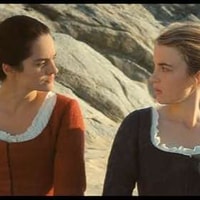
Transcript
I'm as mad as hell, and I'm not gonna take this anymore! So you lie to yourself to be happy.
Speaker B:There's nothing wrong with that. We all do it.
Speaker A:We all go a little mad sometimes.
Speaker B:Come on, if one of you nuts has got any guts, let's put a smile on that face.
Speaker A:You're only as healthy as you feel. Listen to me! Listen to you? By what right? Because I have a right to be heard! I have a voice!
Speaker B:Ladies and gentlemen, welcome to Pop Culture Case Study.
Speaker A:Yeah, let's do it.
Speaker B:I'm pumped. Let's let the healing begin. Welcome to Pop Culture Case Study. Culture Case Study, where we analyze pop culture from a psychological angle. I am your host, Dave, and I'm here with my co-host, Will. And Will, this week, Gregg Araki's I Want Your Sex is finally coming out to the normal people, not to some random festival. And that is a movie about a muse, an artist and their muse. So we are taking a look at Portrait of a Lady on Fire and the female gaze. So We'll get to Portrait. I think everyone already knows how you feel about Portrait. We'll get, we'll get to that. We'll get in depth. But I Want Your Sex, Greg Araki, Olivia Wilde, Cooper Hoffman. How are you feeling about this one?
Speaker A:I'm down. Why not, right?
Speaker B:I don't like—
Speaker A:I feel like Greg Araki is somebody who should be talked about more, obviously, but also very much the kind of pinnacle of not for everybody.
Speaker B:Oh, yeah.
Speaker A:In a mainstream way, certainly. But, um, you know, I am thrilled to have something new from him. And I, I love Cooper Hoffman. I think he's interesting. Um, I don't think everything he's done has been success— as successful as Licorice Pizza was, certainly, but that he's making things and they don't— they're not all in that Paul Thomas Anderson vein or Mm-hmm. Is really cool. Um, I also have very recently done a complete 180 on Olivia Wilde.
Speaker B:Yeah.
Speaker A:Because as much as I thought she was a solid performer in films previous, I thought the Don't Worry Darling debacle was really, really harmful to her and public opinion surrounding her as a presence in, in filmmaking and in acting in general. But The Invite was incredible.
Speaker B:That's what I hear.
Speaker A:She did a terrific job with it, and she's terrific in it. And so I am very eager to continue to kind of enjoy the year of Olivia Wilde, as it were. Yeah, she's she's good at what she does, both on the behind the camera and in front of it. And so I'm curious to see her in a role like this. And yeah, I'm I'm so so down for this. Who wouldn't be down for a Gregoraki film? Those who know.
Speaker B:Yeah, yeah, real ball knowers, as they say.
Speaker A:Real ball knowers.
Speaker B:What about yeah? Gregg Araki is one of the great unsung filmmakers of my lifetime. I think he does incredible work, and I'm not surprised that a lot of people either haven't seen his work or don't respond to it in the way that I do. Like you said, not for everyone. Very risky, very edgy, very different. Nobody else was making or is making movies like Gregg Araki. So I am very excited for this for that reason. And because like, oh my God, a movie in America with sex in it. We are getting back to where we should be. We need more movies that are sex positive and pushing those boundaries and not so chaste.
Speaker A:Yeah.
Speaker B:We have lived in a world in cinema in the last, I would say, 10 to 15 years, you know, tied to the beginning of the MCU in many ways where we have— there was a— I can't remember who wrote it, but there was this great piece about like basically actors have never been more attractive, but less sexy because we haven't pushed those boundaries. We— everyone looks amazing. Everyone is on steroids. Everyone's on GLP-1s. Everyone is as tight and as toned as they can possibly be, and nobody is fucking on screen, and it's crazy. So we have Gregg Araki. We have a movie literally about a dominatrix played by Olivia Wilde. I am so in. I can't even speak to it. I am so excited for this movie.
Speaker A:Yeah.
Speaker B:This is— once I heard about it at festivals and found out who's involved, this immediately became like one of my most anticipated movies of the year. I was like, yes, let's go. And the Olivia Wilde thing, I'm glad you brought that up because, yeah, Don't Worry Darling, not a good movie. But I don't think the issue with that movie is the direction. That is a script issue through and through. And she also directed Booksmart, and I hear that she directed the absolute hell out of The Invite.
Speaker A:Yes.
Speaker B:So I'm very excited to see that. So she's still very high on my list, but you're right, there was such negative reaction to that movie and the Harry Styles of it all and the misogyny that goes along with that. So I'm glad that she is kind of back on top. Weird that I would say that about a woman playing a dominatrix, but here we are. So I'm glad that she is on her game and directing more movies, starring in more movies. I would like more of her on screen. So I'm very, very excited for this movie. So that's, that's an exciting one. So we are talking about the female gaze, not the male gaze. There are 10 billion movies with the male gaze, basically anything directed by a dude, male gaze almost automatically.
Speaker A:There is.
Speaker B:So I'm gonna let you go first. What is your recommendation for the female gaze movie? I mean, we've already taken out the ultimate, which is Portrait of a Lady on Fire. So, right.
Speaker A:Well, I mean, seriously.
Speaker B:So what's your, what's your number 2, I guess, is really the question.
Speaker A:It's probably not my number 2. It's just the one that's on my mind right now because I just recently rewatched it with Andy for the first— she hadn't seen it. And it's Greta Gerwig's Lady Bird.
Speaker B:That was going to be my number 1. Yeah. Good choice. Yes. Yeah.
Speaker A:I mean, Greta Gerwig just kind of has become one of the masters of this idea. I also— on my list is another one of her films that I'll mention if you don't in our honorable mention section. But Lady Bird is, is a tremendous movie. And yet again, I go back to the definition of insanity, the Definition is doing the same thing over and over again and expecting a different result. That is me showing my girlfriend movies that I love because she said it was a solid 3.5, and I was like, "Look, we don't have to letterbox everything, but you're fucking wrong." Oh, that's crazy!
Speaker B:That's nuts!
Speaker A:Said it didn't have a proper ending.
Speaker B:It's know the wedding planner. I mean, yeah, this is definitely five stars.
Speaker A:You know, verbal abuse of my beloved aside, like, look, Lady Bird, I think, is truly one of the best coming-of-age films, certainly, but films, period, of the 2010s.
Speaker B:I would argue it's one of the best coming-of-age films, period.
Speaker A:Ever.
Speaker B:Yeah.
Speaker A:Ever.
Speaker B:It's incredible.
Speaker A:It announced a filmmaking voice in Gerwig, who we'd already kind of seen as a filmmaking voice, given her partnership with Noah Baumbach. But when she finally got behind the camera, and wasn't acting, you know, we could, you could see it was, it wasn't this fluky artist sort of adjacent thing that it was just, oh, she's, she's a good performer. So she's probably, and a good writer. So she's probably involved. No, she can do it behind the camera too.
Speaker B:And, you know, I would argue better than she is in front of the camera. I think she's a good actress. I think she is a great director.
Speaker A:I agree. Um, original ideas. Of course, this is semi-autobiographical about her upbringing in Sacramento. It's a beautiful movie about, you know, mothers and daughters and fathers and daughters as well, but also just is a beautiful portrait of a lady on fire with, uh, burgeoning desire for the young men in her purview.
Speaker B:Mm-hmm.
Speaker A:And those young men are often toxic, and the real true love that you will always have in your life is the friends that you make along the way. And I think that this movie is borderline perfect. And Saoirse Ronan gives what I think so far is the defining performance of her career. And I mean, you can—
Speaker B:there's a lot of options there. She is one of our best.
Speaker A:Like, she's one of our best. But this is like, this is the one where if, if I were to— if somebody were to ask me like, who are some of your favorite actors? And I said, Sergio Ronin, and they didn't know who I was talking about. I was like, have you ever seen Lady Bird? Is probably the first thing that would come out of my mouth. Maybe, maybe I'm wrong, but that's just kind of where I'm at. So I love this movie, and I was— despite the reaction that happened to my right, I was as all in as I've ever been with this. I mean, when Timothée Chalamet, whose name I haven't mentioned, he's also in this movie, uh, in a small role, but when he says the words Uh, when he, when he said, I didn't lose my virginity to you, that would be a lie. And I haven't lied in 2 years.
Speaker B:I'm like, this is just the ultimate fuckboy.
Speaker A:Like, that is so brilliant.
Speaker B:Honestly, that the way that she films him is the real gift of that movie. Like, it is.
Speaker A:Oh my God.
Speaker B:It's the best he's ever looked. It's, it really is. It's the guy, you know, you shouldn't be with. And yet you're like, but Not, I can change him. I know I can't. And yet I'm gonna give it a shot anyway.
Speaker A:Like— And not to get off on a massive Lady Bird tangent, but just, there's an evolution to how he is filmed and how many of the characters in the movie are filmed over the course of the movie. You know, you start in one place with, oh my God, mysterious, hot, tortured, you know, Philistine, boy over here, and I am this not so, not so pixie, but certainly manic girl, um, who just wants to be desired. And he seems like maybe he could do that. And then by the end of the movie, he is just cast aside as a total asshole because that's what he is.
Speaker B:Yep.
Speaker A:But at the beginning, you're like, damn, who is this guy with the cigarette and the book, the history of the United States? Like, it's incredible.
Speaker B:It's so good. He has thought a lot about how he is perceived for sure. That is all very purposeful. All right. So the choice I'm going with is, I would argue, one of our most important female auteurs of the past 20 years. And that is Sofia Coppola's Marie Antoinette. Very good.
Speaker A:It's also on my list.
Speaker B:One of the big pieces of the female gaze, which I will talk about in a moment, is the idea of not just having a woman behind the camera, but that it features female characters that are complete people.
Speaker A:Yep.
Speaker B:And the fact that she took one of the most villainized women in history and made us care about her and made us think of her as a real person and remember that she was a child when she was married and that much of what happened was well beyond her control is a real achievement. In this movie, and it's a movie that has really grown on me. When I first saw it, when it first came out, I was like, "That was all right." I was you know there's good stuff in it, but it's not really for me. And then I rewatched it maybe five six years ago, and I was like, "Wait, this is great!" Like this is this might this is close to her best work, and she's done a lot of really good work. So Marie Antoinette was my choice. So I'm gonna go over. Some other options that I had. I'll take out Lady Bird because you already mentioned that. Beach Rats, which you have brought up more than once, I think, in these sections. And it's also important to remember that you can have a movie that has the female gaze without a woman directing, without a woman behind the camera.
Speaker A:Certainly can.
Speaker B:So I chose Creed. I chose Mad Max: Fury Road. I chose Carol. So those all were the male-directed ones. And then to finish it off, I have Birds of Prey.
Speaker A:Nice.
Speaker B:Point Break.
Speaker A:Of course.
Speaker B:A Girl Walks Home Alone at Night and Sorry Baby, to pick a more recent film. So I'm frankly like, this is one of those categories that like every one of those movies, I'd be like, I would happily watch that. Right now. And that says something maybe about the female gaze that like, maybe we should focus on this. It's one of the things I love most about Coogler is that he always uses a female cinematographer. And I think that really has an impact on his work.
Speaker A:Yeah. Yeah. There was a, uh, number of years ago, there was a series at Film at Lincoln Center called, I think the title was The Female Gaze. And a lot of it was like—
Speaker B:That is still on the internet. I looked that up.
Speaker A:Yeah, it is.
Speaker B:I was like, oh, amazing. I hate you people in New York.
Speaker A:This rules. It was a beautifully programmed series, and a lot of— not every film was directed by a woman. Like, there are— it was more talking about both the concept of the female gaze as a theme, but also the female gaze as the director being the female gazing, or the cinematographer. And Autumn de Wilde— um, Arkapa, excuse me, not Autumn de Wilde. Emma is one of the films on my list. Autumn de Wilde, uh, It's uh, she was featured because she is Kugler's cinematographer. So it's it's more than fitting. Absolutely. I'll just start with Emma, I suppose. The 2020 film by Autumn Wilde.
Speaker B:Right as well.
Speaker A:Really fun. You know, I'm pretty certain it's Jane Austen.
Speaker B:It is.
Speaker A:Yeah, it is Jane Austen. Of course. I don't know why that blanked on me for a second. But yeah, Anya Taylor-Joy and Yeah, having maybe the most fun she's ever had in a role. It's a nice movie. It didn't end up—
Speaker B:Very good looking movie too.
Speaker A:It's gorgeous and colorful and really like, you know, not to paint too broad a brush, but I tend to just think that the female gaze is a more colorful one. And I mean that as a wholehearted compliment because men often see things in very much black and white and Yep. Women tend to notice more. Maybe that's why, why they live longer. But non-scientifically, I will transition to the other movies on my list, one of which is another recent one, but Past Lives by Song Hye Kyo.
Speaker B:Yeah, great choice. Yeah.
Speaker A:Again, another beautiful romance, but is not— we don't often see romances through a feminine perspective in a love triangle, that is.
Speaker B:Right.
Speaker A:We certainly see them in rom-coms. But, you know, this— the, the men still take center stage. And this one, very much on the periphery. Yeah. In comparison to Greta Lee's main character. I also had Carol. I also had Marie Antoinette. You didn't mention Little Women.
Speaker B:I did not. But yeah, that's a good one.
Speaker A:I thought about putting that on my list, but Yeah, that one I think is a little broader, um, just in terms of, you know, one of the sisters is rejecting the notion of the female gaze almost entirely, that being Jo, um, played by Saoirse Ronan, of course, in Greta Gerwig's version, which I think is the superior version, just saying.
Speaker B:By far. Yes, by far.
Speaker A:It's not even close. Um, and, you know, she's pro-focused— she's focused on her profession.
Speaker B:I should watch that movie again. I need to watch that movie.
Speaker A:This is what I'm saying. All of these movies Like I said, I said to Andy the other night as we're watching Lady Bird, I'm like, actually, let me show you the trailer for Little Women because the trailer is one of the best trailers I think I've really ever seen, at least certainly of late. And she was like, I definitely wanna watch that, but let's start with Lady Bird. And I just, I need her to see Little Women. And if she doesn't like it, we're gonna have a tough conversation. But yeah. And then Amy, the other character, Florence Pugh, my one true love, is fantastic. Focused on her duties as a woman, which is to be loved and to love. At least at that time, those were her duties. And so it's—
Speaker B:I just realized I should have put Lady Macbeth in this list. Oh, terrific.
Speaker A:Yeah, of course. Lady Macbeth.
Speaker B:So good.
Speaker A:Florence Pugh. I'll throw that in there just because you did. I also have Claudia Wilde's Girlfriends.
Speaker B:Oh, yeah. Yeah, good one.
Speaker A:Just a tremendous movie about Wildly underseen, my God. Yeah, I mean, yeah, it's about friendship, but also like the female gaze of those friendships, you know. I don't— I think the female gaze can be multifaceted in that it doesn't always have to be this sexual romantic—
Speaker B:definitely not.
Speaker A:It can be about like the things that we miss, the things that we regret, all of that. So that's on there. Moonstruck.
Speaker B:Ah, great choice.
Speaker A:By a man, Norman Jewison. And then a couple others that are all directed by women, those being You've Got Mail, Nora Ephron's film, Nancy Meyers' The Holiday, which I think is a really—
Speaker B:any Nancy Meyers, any Nancy Meyers would have gone in here, you know.
Speaker A:I had Julia Ducournau's Raw, the female gaze of meat. Yeah.
Speaker B:Oh yeah.
Speaker A:And a movie we recently talked about, or at least a couple months ago, Gina Prince-Bythewood's Love and Basketball.
Speaker B:Yeah, good call. Yeah, lots. Honestly, on both of them, we could go on.
Speaker A:We could go on without talking about Portrait of a Lady on Fire for probably quite a bit longer.
Speaker B:On both of our lists, there's not a single movie on there that I would not happily watch right now. Like every single one of them, I'm like, yeah, pop it on, let's go. So yes, absolutely. All right. So we are going to take a quick break, then I will talk all about the female gaze. Just what you needed, a man talking about the female gaze. And then we will come back with Will to talk about Portrait of a Lady on Fire. All right. So for the psychological section today, as I mentioned, we're talking about something called the female gaze. Now, this is in direct opposition, of course, of the male gaze. The male gaze is a concept in feminist theory that describes how arts, media, literature, et cetera, depict the world from a masculine heterosexual perspective. It usually reduces women to passive sexual objects purely for the pleasure of male viewers. So it prioritizes male desires over women's desires or even women's autonomy, which is interesting because that's what this whole movie is really about in some ways, is female autonomy. So the female gaze, also a feminist theory term, and it refers to the gaze of the female spectator, character, or director of any artistic work. So it's not just gender-specific. It's about representing women as subjects that have agency. So people of any gender can create a movie or a book or a play with a female gaze. As I mentioned, it's in response to the male gaze, which was started by feminist film theorist Laura Mulvey. So Mulvey discussed aspects of voyeurism and fetishism in her article. Particularly about the male gaze, and it was called Visual Pleasure and Narrative Cinema. She started talking about Rear Window, Alfred Hitchcock's film from 1954, which also great movie, you should absolutely watch it, but there is a lot of male gaze in that. So she connected Freud's theories of psychoanalysis to discuss things like narrative choices, props, camera angles, while focusing on this concept of the male gaze. She also focused on this concept of something called scopophilia, or a pleasure in gazing, and placed women as spectacles to be objectified and viewed, unable to return that gaze, importantly. And in her article, if you read it, she kind of says that most depictions of women in film are inadequate as representations of human beings. And it's something we really have to look at as film fans, as film critics, as people just passively watching movies is that when we are always in the perspective of a heterosexual man, then you're going to have inadequate representations of lots of other groups of people. So the female gaze looks at 3 specific viewpoints: the individual who is filming, the characters in the film, and you, the spectator. So these 3 viewpoints, of course, started with Mulvey's male gaze, but for the female gaze, the focus, of course, is on women instead of men. The viewpoints expanded alongside also diversity in film genre. Women's films was actually a genre that focused on female leads, showing the woman as a diegetic storyteller rather than as a spectacle. So movies like Rebecca are included in this. So that's any movie where the traditional narrative is told through a female protagonist. So you may have heard the derogatory term chick flicks, right? Especially romantic comedies fall into this. Many of these films are from a female perspective. One other person, Zoe Dursey, she talked about the female gaze through the documentary film genre, taking a look at aspects of pleasure and viewer identification. She analyzed the gaze at the points of production and reception, and she noted that if the cinematographer is female and the subject is also female, the object of the film takes on a different role. She argued that having a female cinematographer allows women to be viewed as they are and not as a spectacle. And that is what the male gaze tends to do. She came up with this— she was filming in Cairo and she was in a crowd and she observed being noticed by the men around her. At first they were curious and she wondered if it was because of her gender or the fact that she had a camera. Not long after that, they began to push past her and she felt endangered. And she felt other women in Cairo probably shared this perspective. This is depicted in the film that she made, Shadowmaker. She said her gender allowed her to be an unobtrusive observer, unlike a man, while filming Romani women singing. So just by virtue of her gender, sometimes she was able to be welcomed into a group without intruding upon them. Paula Marantz Cohen also discusses the female gaze, especially in the quote-unquote chick flick genre, with specific attention to the clothing that women tend to wear. According to her, spectacle overrules plot in some films. So she brought up a movie called The Awful Truth, uh, starring Irene Dunne, and her wardrobe is regarded as a central aspect of the movie. According to Cohen, the different dresses that she wears are extravagant but not sexualized. So the clothing might even be regarded as comical, but it's supportive to the character's independence and femininity. She noted that in the film The Wedding Planner, which is a movie that we covered on this podcast, actually, Jennifer Lopez is fully clothed throughout the entire film. The clothes are regarded as comical, but they catch the viewer's eye without sexualizing them. She also analyzes the relationship between the female lead of these films and their male co-stars. She states these films depict what women want, that they are accentualized in a positive way and have a partner who amplifies this without being overtly sexualized. So probably the most controversial example of not the female gaze is a movie called Blue Is the Warmest Color. It is a lesbian drama that received a lot of comment for the dominance of the male gaze and the lack of female gaze, with some reviewers even referring to it as patriarchal. So, Jewel Morrow, who wrote the book upon which the movie is based, was among one of the more harsh critics, and she said, quote, it appears to me that there was something missing on the set— lesbians. So, um, filmmaker April Mullen has said, women have this vulnerability and connection to a depth of emotions that I can see and feel in certain moments of truth in the film we create. To me, the female gaze is transparency. The veil between audience and filmmaker is thin, and that allows people in more. And this gives me a moment to get on my soapbox. There is an internet challenge called 52 Films by Women, and it basically tells cinephiles, hey, you should watch more movies directed by women. You'll get a lot more female gaze that way, and you'll get a lot more different perspectives. So it's the idea of if you're watching a bunch of movies, one a week should not be that difficult if you're going to find female filmmakers. Art historian Griselda Pollock also talked about this. She talked about the concept of Matrixial gaze, Eros, and witnessing to analyze the feminine gaze in the films of Chantal Akerman and Pedro Almodóvar. So this has come up time and time again. So, and you see it a lot in, you know, in social media, because it is a way not only to get attention, but something that is kind of headline grabbing. And in some ways, this is really good. And in some ways, it oversimplifies what the female gaze is. So they even— I was reading this article, and they mentioned And there is a phrase popularized on TikTok, just written by a woman, typically referring to men who are portrayed as emotionally vulnerable and aware, as well as rejecting toxic masculinity. The most often cited is Laurie from Little Women, played by Timothée Chalamet, very much written by a woman. It serves as a reaction to the male gaze, occasionally manifesting itself to satirize its logical antonym, written by a man. So this would be over-the-top displays of female oversexualization, and I'm telling you, this will not be hard to find. If you think about it for like 5 minutes, you'll probably think of a couple. So this has been applied, of course, in media. So American writer and director Joey Soloway addressed additional components of the female gaze in film and media. They were at the 2016 Toronto International Film Festival masterclass, and they outlined 3 key concepts. Feeling-seeing, the gazed gaze, and returning the gaze. These concepts are easily contrasted with the 3 looks of Laura Mulvey's gaze. In films and media, feeling-seeing refers to a process of filmmaking that makes the camera subjective. The gazed gaze creates the perspective of being in rather than overlooking the character's experience, allowing the audience to understand a character's feelings, emotions, and inner thoughts. A really great example of this is, of course, the television show Fleabag, which is great. You should absolutely watch this. But they do this trope through direct eye contact and discussion with the camera lens. Phoebe Waller-Bridge, who wrote and directed and stars in Fleabag, she breaks the fourth wall constantly so she can kind of reveal what she's going through to the audience directly. So the gazed gaze refers to a connection with the audience aimed at conveying conceptions of being desired and as the object of one's affection. So Pride and Prejudice, the 2005 version, displays this during a scene in which Mr. Darcy admits timidly to Elizabeth Bennet his captivation and affection for her in a manner that is not in line with grandeur professions of love usually seen in this genre. During this, the camera's angle makes the viewer appear as the subject of Mr. Darcy's love confession. So you don't see Elizabeth in that moment, you just see Mr. Darcy. It's like he is talking to you. So to address the rise of rejecting and returning the gaze in film and media, Joey Soloway also conceptualized returning the gaze. This is switching the roles between the audience and the subject of objectification in the film. The gaze is then shared between the objectified and objectified, through which the character realizes their role, replacing it or returning it to the viewer. So this actually is shown in Greta Gerwig's Barbie. So the film follows, of course, Barbie as she becomes more aware of herself and more of an individual. So she leaves quote-unquote Barbie Land to go to our world, where she experiences things like sexual objectification and the patriarchy. So she starts to realize what it means to be seen as an object and what that implies about living in the patriarchal society that we do. So of course, like any theory, the female gaze has its criticisms. So in an article for Film Quarterly called No Such Thing, Not Yet: Questioning Television Female Gaze, Caitlin Benson-Allow discussed the lack of representation of minorities in the female gaze. She argues that this presumes a universal experience based purely on gender, and it ignores other parts of your background. So she especially talks about shows like I Love Dick, GLOW, and Insecure. She argues that the first 2 introduce characters of color, but they put them in supporting roles so it doesn't ever get in the way of the white protagonist. Insecure, on the other hand, provides a model for future feminist television. So it actually explores not only what it is to be a woman, but it explores racial dynamics in Los Angeles. So it challenges the focus on white feminism and the neglect, particularly of Black women. Zoe Dersey, who we talked about, the cinematographer who talked about documentaries, also criticized the reproduction of the female gaze and underrepresentation of women in technical areas of filmmaking. So using that experience with documentaries, she focused on the female gaze at the point of production. There is a dominance of white middle-class males in the film industry, so women are often shut out of this due to its profitable nature. It creates a lack of women producing for the female viewer or just reproducing the female gaze. And Jessica Taylor in Romance and the Female Gaze: Obscuring Gendered Violence in the Twilight Saga, she criticized the emerging female gaze and how it interacts with romance to portray violent male bodies as desirable. She describes that Twilight series as retrograde and naive in how it uses romantic conventions. She explains how the female gaze works to create violent male bodies as desirable. So she used the work of Mulvey here. She focused on the notion of fetishistic scopophilia. So this leads female viewers towards hyper-desirability gaze of the bodies of male characters and pushes female audience members to desire the powerful, violent male body rather than fear it. Examples she gives are the way in which the bodies of both Jacob and Edward are manipulated by categorizing them as visually desirable. So, but we're not just talking about the female gaze, we're talking about the female gaze in Portrait of a Lady on Fire. So there's an article from the BFI, um, just titled How Portrait of a Lady on Fire Celebrates the Female Gaze. So it states that Céline Sciamma's Portrait of a Lady on Fire offers a countermeasure to centuries of the male gaze in art, reaching out to other female artists and poets in its study of desire and creation. So it breaks from the modern setting of most films by being mostly set, of course, in the past, in a manor in 18th century Brittany. So historically, the male gaze is the dominant way of looking In and at art. The female gaze has been suppressed or even erased. So she doesn't want to rewrite the past. She embraces it by, by radically presenting her own subverted canon. Her film presents a treasure trove of female desire, reciprocated gaze, restraint, and even portraiture as a way of fixing fleeting moments of life as a memory. So it's important to note that, of course, even to be an artist, one of our lead characters has to submit her art in her father's name.
Speaker A:claim.
Speaker B:This is a way that women have been overwritten in our past, even if they did produce the art. And in many cases they didn't or weren't allowed to, but even when they were allowed to, they've been overwritten. So Tsuyama provides what this author calls a countermeasure. She investigates the female gaze, she cherishes it, she embellishes it, but she also celebrates women in art, giving them a voice they can claim on their own. So the movie reverses traditional patriarchal dynamics. It places women as both subjects and creators. It eradicates this idea of objectification, this voyeuristic look. So instead, it's an equal reciprocal love story, and it's based on respect and shared experience. So instead of some power dynamic where a man views a woman as a passive object of fantasy, the director presents a relationship built on equality. The painter, Marianne, and her subject, Héloïse, are not separated by this hierarchy of the artist and the muse. They work together. The act of looking is happening on both ends, and both women share vulnerabilities as they discover their desires on equal footing. It also subverts art and romance. Historically, women have been painted to be looked at by men, especially in this 18th-century setting. And of course, Marianne is a female artist in a male-dominated field, actively dismantling this oppressive gaze. So Sciamma avoids exploitative objectification. The intimate moments and even the physical touch are not framed with voyeuristic pleasure, but really an exploration of intimacy between 2 consenting equals. And even in moments where there is nudity with the women either together or alone, it tends to look less composed and more relaxed. It is not necessarily for the intent of titillation. It is just the fact that these are our bodies and we are intimate with each other. The film also argues that memory is a uniquely feminine tool of resistance. So you are not going to be reduced to some frozen muse. Héloïse dictates her own fate, choosing her own memories and retaining power over how she is remembered. There's a moment late in the film where, just like Eurydice, she tells her Or not just like her, but in the vein of Eurydice, tells her to turn around, right? I want you to remember me. So this is— these are some of the many ways that the female gaze is used in this particular film. All right, so we're going to take a break, and then we'll bring Will back to talk about Portrait of a Lady on Fire. All right, so we're back finally, Will. We have reached— we have reached the mountaintop. We are gonna talk about Portrait of a Lady on Fire, a movie that I have been wanting my wife to watch since the day I met her, and it had not happened until now.
Speaker A:So, wow.
Speaker B:As far as history with this movie, I was lucky enough to have seen this in the theater when it came out in that December, and I walked in thinking, okay, I'm probably gonna like this cuz I knew It was a French love story, lesbian love story, longing. This is like, yeah, I'm gonna love this. I'm excited to see this. And that's probably the hardest I've cried in a theater in about 10 years. Like that—
Speaker A:Check.
Speaker B:It fucked me up. And it was one of those movies that I just started proselytizing about it. Like I was telling everyone, if you can see it, see it. If you see, if there's a showing in your town, see it immediately. I don't know how long it'll be out because it's, of course, a very small release, but my God, this is— and I remember saying right after I saw it to myself, I think this might be one of the best movies ever made. And looking back now that I've seen it 5 times, I was right, and I should have said it louder. Yeah, this is one of— this is probably, to me, This is all subjective, but this is probably in the top 25 ever for me. I think it is a literal perfect film. There is nothing I would change about it. It is a masterpiece. It is a work of genius. Fabulous movie. And I'm so happy I got to watch it again. What about you, Will?
Speaker A:I agree with everything you said. I'll start just with my general thoughts on it. I do truly believe this is one of the best movies ever made and is a perfect film. I mean, rewatching it, I just felt everything that I felt the first, first time and every time after that. It truly is one of those movies that lives within you timelessly and does not lose any luster no matter how many times you go back to it. And, you know, I remember When Sight and Sound put out their their list, I believe it was in 2022. Their list, their updated list of the greatest films of all time, and this was I think it was like in the 30s, like 32, something like that. Yeah. And if I got that right, I'm sick. But there was like a little bit of a little bit of outcry. It was relatively quiet, but people were like. Portrait of a Lady on Fire is the 30th best movie ever made.
Speaker B:And that is correct, by the way. It was number 30. Okay.
Speaker A:Yeah, I got problems. But look, it's not that ridiculous. Watch the movie. Yeah, you'll get it. Like, truly, it is genuinely a perfect film, and it's one of the most beautiful movies just in terms of its images, but also obviously in terms of the narrative that we're going to talk about. But okay, in terms of his History, this was the first film I ever saw at the New York Film Festival.
Speaker B:Wow, nice! Which has been hell of a start. Yeah, which crazy to like peek at your first movie and literally reach that again.
Speaker A:Literally have never; it's never happened again. The only movie that I think maybe has come close since is like Nickel Boys, but it's completely different. And you know, with this one, I. I went alone, and I was in college, and it was right at the time when all of this for me was really, really, really starting to reach the point it is still at today.
Speaker B:Yeah.
Speaker A:You know, it wasn't quite there, but this, I mean, it just completely bowled me over. And I just, I couldn't believe what I was witnessing. I, you know, I think that people say that all the time about movies, and they don't really mean it. And Um, they're just, they're saying it because hyperbole is, is the most valuable currency in most media, uh, categories. And with this one, I mean every single word of it. Like, it truly is a masterpiece. And I, I, I will cherish the fact that this movie exists, let alone that I have seen it as many times as I have, that I saw at the New York Film Festival in a theater as it's meant to be seen. I just— it means a lot to me as one of those formative experiences. And just, you know, it was my— it was my favorite film of 2019, as it was for many, many people. I— real quickly on it, in terms of like legacy, it's not a shame that Parasite exists, but it's a shame that Parasite came out the exact same year as Portrait of a Lady on Fire, because I think that for the people who See one foreign film, sure, a year. That was the one that everybody was like, "You gotta see Parasite," and justifiably so. That movie is also a masterpiece in its own right.
Speaker B:But I think it's more of a populist film.
Speaker A:It is absolutely, and it was also funny. It's also distributed by Neon, so there goes the marketing attention and the especially back then they really only had the money.
Speaker B:For one push, and France didn't want this movie anyway.
Speaker A:They didn't want it. I think they picked Les Misérables, the Lajli film. I want to say something like that. But in any case, it doesn't really matter because the legacy is going to be the life for this movie should be eternal. Like yeah, it's it's that good.
Speaker B:Yeah, and you know, directed by Celine Sciamma, who has made her share of great films and is one of those directors I wish. I wish there were like 30 movies that she had directed because she's, you know, she's the, uh, she's the embodiment of this motherfucker don't miss. Like, she just—
Speaker A:Seriously.
Speaker B:Everything that she puts her hands on and, you know, and, and her eyes behind is epically good. And this is a movie that— so I watched it with my wife this time and she loved it because she is a woman of taste. Obviously she married me. Um, but after the movie ended, she was like, oh yeah, that's a Dave movie. Like, and I was like, yeah, it 100% is. Like, it is absolutely like catnip for me. I understand that I am probably going to like this movie more than most, uh, because it really hits on things that I really appreciate. And for those people that don't know the plot, essentially this female portrait artist has traveled to this place to paint a portrait in secret of this young woman. And so she has to kind of at the beginning pretend to be friends or companions with her so she can see her, so she can steal glances at her. Of course, that's not the only reason she is stealing glances, but a lot of it is to paint the portrait. And their journey together, their relationship, what it means to be a woman in the world, in the world of art, in a world where you can be sold off to marriage at any time, in a world in which you maybe have no freedom. And if you do choose freedom, you choose maybe an even more difficult life on your own. Because at this point, at least in this story, women could not be portrait artists. They could not be artists on their own. They would have to— in her case, she would have to put it under her father's name. who was also an artist. So there's a lot going on here. And one of the things I adore most about this movie, and I actually was just on a podcast talking about Mother Mary, and it's a very similar thing, that in Mother Mary there are no men, zero men in that movie. And in this there are men, but very rarely, and it's always an intrusion.
Speaker A:Yeah.
Speaker B:There's a man in the very beginning when she is in the boat coming over and does nothing to help her. when her gear goes over the side.
Speaker A:Her portrait.
Speaker B:She has to go swimming to go get it. And then there's a moment with about, I guess, about 30 minutes left in the movie where all of a sudden there's a man downstairs. And even as an audience member, you're like, huh, what are you doing here? Get out of here. We were doing so well. Like, what are we— you're not needed here, dude. Like, so I love that about this movie that it never comes out and says it. It's not like men are despicable, or these women's lives are terrible because of men. But you do feel this insular quality of their relationship because basically when they're together, it's just them. Like, the 90% of this movie is 2 women talking.
Speaker A:That's it.
Speaker B:It is not an action movie. There is not a lot of fanciness going on. It is It is Yama trusting. And I think Claire Mathon was the cinematographer here.
Speaker A:That's correct.
Speaker B:Talk about gifted. Holy God. Everything that she films is also incredible. So it trusts the story, it trusts the actresses, it trusts the audience. There's not a lot of handholding about what's going on here. You just have to kind of dive into this world and it's wildly rewarding when you do, because both of these performances— no, who? Merlant and Hanelle. Adele Hanelle.
Speaker A:No Emmy.
Speaker B:No Emmy. Okay, thank you. Yeah, both incredible. So sad to me that Adele Hanelle has retired, mainly because of sexism in the film industry, like, which hard to blame her. But like you said, I mean, these are performances that will last forever. Like, this is one of those movies that I don't think there is an expiration date on this. Like, this is one of those movies that in 2030, in 2050, you could go back to and really still live this experience. And it's just absolutely beautiful. It is.
Speaker A:Mm-hmm.
Speaker B:There's a lot of movies, there's a lot of gay stories about longing. There's a lot of gay stories with sad endings. This one, one thing I really love about it is it's not out-and-out sad. It's bittersweet. It's about—
Speaker A:That's 100% the word.
Speaker B:It's about being— in many ways, this movie is about being remembered. It's like there is a scene near the end where, you know, they've just gone over the kind of old myth about like looking behind you and is the memory more important than being with the person for a short amount of time. And she tells her Turn around.
Speaker A:Right.
Speaker B:Like, look at me, remember me. And that goes, and that lasts her entire lifetime. And then, you know, this is one of the great, the great moments of romance in film history. It's just a number on a page in a painting. And it like, I'm tearing up thinking about it right now because it is that impactful. And as I was watching it this time, when the camera zooms in on it, I literally heard my wife gasp. And that is the experience of this movie.
Speaker A:That's the moment.
Speaker B:That, that realization of like, she still loves me. Well, we might never be in the same space together. We might only see each other from a distance, but that almost doesn't matter. All that matters is that we had this And we both remember. As long— it's that idea, it's like, as long as we're remembered by our loved ones, we're immortal. It's the same idea here, that they remember each other in a real way, not in a like, I met this girl once and she was so pretty and I didn't have the courage to go talk to her, or we had one fling but, you know, it probably wouldn't have worked anyway. This was legitimately true love. And it was only for a moment in time, and that's kind of okay. Because that will always be there in each other's hearts. And it's like, just the way that this movie wraps up is like— and it— the movie essentially ends on an almost painfully long shot.
Speaker A:Oh.
Speaker B:Of her finally experiencing music, probably remembering her and weeping. And you see pain. and sorrow and remembrance and happiness and bliss all in the space of this, like, I don't know, 40, 45 seconds, which feels— when there's no dialogue, that feels like about 5 minutes. Like, it stretches and stretches, and yet it— I think it ends at the perfect moment. Like, this is— this is Sciamma's real gift, is knowing exactly when to pull away and when to move forward and when to fade to black. And the ending of this movie is a perfect example of that.
Speaker A:I think Sciamma's real gift is certainly on display there, but also is just the timing in general. Yeah, like the fact that the number 28 is brought back when it is, the fact that—
Speaker B:so good.
Speaker A:Um, you know, the conversation about Orpheus and Eurydice happens when it does and then it's called back upon again later. That's the That's the turnaround to look at your loved one conversation. You know, the first time they meet, you know, is the first time they come into real contact and exchange words to one another is when, when Héloïse, played by Adèle Haenel, is sprinting towards the edge of a cliff.
Speaker B:And the way they wait in that scene too, where like slowly the hood is falling off and you don't really see her face. Oh, it's so good.
Speaker A:There, there's so much perf— it's, it's like borderline too perfect, the timing in this movie, but also the sincerity in which those moments of timing, of perfect timing, are delivered is what really makes it sing. Um, I mean, to skip ahead to the end and talk about that, you know, I, I believe it's from Vivaldi's Four Seasons is the song. The You know, it's like she in a in just they shared that together for a brief moment. Yeah. When Marianne played it on the piano, and then it comes up at the orchestra and Eloise slowly again, as you said, no dialogue is is is spoken. Nobody speaks, let alone the monologue. The the last thing I believe we hear in words is that I saw her one last time. And it was across the balcony at the orchestra. And then that song begins to play and Eloise slowly breaks down into, from, you know, a tear dropping to a violent, like shaking, sobbing moment of remembrance. And that I think is, you know, you mentioned that men are not viewed here as like it's an intrusion, but not the— not like the thing that is necessarily the enemy almost.
Speaker B:It's just like— Right. Not a villain. Yeah.
Speaker A:Not villainous. This is what society at the end of the 18th century was like. And, you know, that they know that. They know everything they're doing is forbidden. They know everything they're doing cannot last. But sharing it is more important than it lasting. That is what I think is so beautiful about this movie that Celine Sciamma really understands is that if you share something profound and meaningful, nobody can take that away from you no matter what happens.
Speaker B:That's right.
Speaker A:And, you know, it's curious. Celine Sciamma, who is gay, she was with Adèle Haenel for a very long time. They met, they met when Adèle Haenel was very young on the set of Water Lilies and began dating hopefully sometime after that. Although I can't remember off the top of my head what the age of consent is in Europe, but it doesn't matter.
Speaker B:Right.
Speaker A:In any case, they were together for a very long time and they separated amicably soon before Portrait started shooting. And, you know, it's— I'm not going to prescribe meaning to it. This is an original story by Sciamma. But I mean, there is again that moment of they could share the press run of this to go real behind the scenes together. Like, it happened to you, so it matters.
Speaker B:Right.
Speaker A:I think we do a lot of looking back and regretting in life, or at least I know that I have, and I'm trying very hard now with where I am in life to not have regrets, but instead to, you know, look back and appreciate that something happened regardless of how bad it was.
Speaker B:Mm-hmm.
Speaker A:You know, because it meant something to you and it did something to you fundamentally. It altered your brain chemistry in some way that, you know, that's a phrase we use all the time. It altered my brain chemistry. Well, I, you know, with all due respect, that movie that you're talking about that altered your brain chemistry probably didn't. It probably just made you feel something, and that's okay too.
Speaker B:Totally.
Speaker A:So I'm not gonna— I'm not gonna take away from you what— what words you want to use to describe that experience. It's just— it matters that it happened to you, and that's— that's good enough. Um, I think this movie just beautifully encapsulates that idea. Over and over and over again, and it never feels like it's beating you over the head with it because you really are just a fly on the wall witnessing this beautiful romance, however fleeting, between these 2 women. And I have more, but I want you to speak.
Speaker B:So I was thinking, of course, you know, watching this, I was thinking about the female gaze because that's our theme, and there's, there's a lot that stands out to me connected to that. But 2 things in particular have moments where I'm like, man, not very many men could have directed this, could have built this. And one of them is a strange thing. But the fact that our lead character is falling in love with a woman who doesn't smile.
Speaker A:Yeah.
Speaker B:Who scowls, who catches you looking and like kind of narrows her eyes. And that doesn't, that doesn't dissuade her from loving her. It's, it's something that's like, that's just who she is. And like she even says when she's painting her, like, I, I just can never get yours. I can't capture it. I can't capture your smile. Like it's fleeting and it's private, right? It's this like secret smile that she only gets to see when they connect, when they become lovers, then she gets to see the smile. And what a beautiful idea. And I think most men would not be able to handle this because, like, you know, when we, when we film an object of affection, it's always like stereotypically pretty, right? That's like, oh my God, this ethereal goddess. And that's not what is happening here. And, and I really adore that about, about this movie because it, it forces the love to seem normal.
Speaker A:Yeah.
Speaker B:and approachable and real.
Speaker A:Right.
Speaker B:Right? Because that's what, you know, gay, straight, bisexual, whatever, that's kind of what we fall in love with is like, not just like, oh my God, she's so hot, but like, oh, there's something about her that I can't quite pinpoint. And there's— it's not a mystery, but there's something that's not quite exactly like I expected. And that intrigues me. And that's why you get to know people and that's why you connect with people. And this movie manages to do that. that in 2 very short hours. And you really— and it's crazy because like it's a, it's a relationship that happens relatively quickly, and yet I walk away from this knowing that these 2 were meant to be together. And it's not a movie that ever says that. They don't call each other soulmates. They don't say this was meant to be. But I feel that in my heart and soul when I watch this movie.
Speaker A:Right.
Speaker B:And the other thing I notice is that there is nudity in this movie. But the way it is filmed is so, I guess, relaxed.
Speaker A:Right.
Speaker B:Like, it's not presentational. When men tend to film women in, in the nude form, it's very posed and very presentational. I think, you know, as I talked about in the psychological section, the, the perfect comparison for this is Blue Is the Warmest Color, which is what I think is a good movie. But those sex scenes, you're like, yeah, a dude definitely directed this. Like, this was a dude's fantasy, and he got to film it with 2 stunning actresses. So good for him, I guess.
Speaker A:He finally had a use for all that porn he watched when he was younger.
Speaker B:Right, exactly. But this movie never does that. It feels like 2 real women spending time together, and they happen to be in various states of undress because they are lovers. And it— and you watch it and you don't feel ever like you're leering. It feels like you're just just in the scene, you're watching the scene, and it never feels creepy. And a lot of times when men film, especially like a lesbian drama, men film this, it comes off as like, I like, I feel dirty even watching this. Like, why am I here? This feels too intimate and I shouldn't be a part of this.
Speaker A:Right.
Speaker B:Whereas this just feels natural. Like the only really posed nudity is in near the beginning of the film, when our artist is kind of drying out her canvases and sitting by the fire. And that is a moment that is very posed, but it's still not lecherous. It never goes there, which I love.
Speaker A:Yeah, I mean, I was just gonna say, I think I was trying to remember the moment that we do it. It's— you said relaxed. I'd even go so far as to say it's casual. Yes, because that's what it's—
Speaker B:it's not Just lying in bed together. Terrific.
Speaker A:Like, yeah, yeah, presentational is the perfect word because that is how nudity is treated far too often. And so often in film, it's like this fucking, you know, forbidden thing that, oh, oh my god, whoa, she's not wearing anything. Like, I think this is the nature of the movie I'm about to mention, but like the moment that Margot Robbie's character reveals herself in The Wolf of Wall Street. Sure.
Speaker B:Perfect example.
Speaker A:Yes. Opens the doors to another room and she is stark nude. And it's like, I am finally on display to you and to everybody in the audience. And that's not to say that Martin Scorsese is a creep. I'm certainly not saying that. But he also knows what this— that character, you know, how it should be presented in that movie. a one-to-one comparison, but that's often how it is portrayed. It's like this big culminating thing. We saw the boobs, you know, like, right, right.
Speaker B:Yes.
Speaker A:And in this movie, it's just this woman. Her, her clothes were wet and her, her canvases were wet.
Speaker B:Got to light a fire and dry it.
Speaker A:Have to light a fire because we don't exactly have, you know, laundry machines and dryers lying around in the 18th century. So I have to do something to get this stuff dry. And I don't want to put on another gown because I'm going to bed, right? Totally.
Speaker B:So no one else is here.
Speaker A:No, and nobody else is here. And nope. And who the fuck is looking at me? We are, because that's what's being filmed for the, for the sake of the movie. But it is very casual and just matter of fact. This is— it is what it is. It's not this big thing that we have to dedicate seconds to, you know, go up and down the body. She's just walking around. I think that's also what I love about their, their romance is it's not this— it's not this torrid affair, right? Yes, it's forbidden, but it's not this like tearing each other's clothes off. We only have to— we only have so long, so let's make sure we have sex as many times as possible. No, it's about the connection between the two.
Speaker B:It's about the intimacy.
Speaker A:Yeah, right. The int— that's exactly it. The intimacy is what I feel.
Speaker B:Yes.
Speaker A:When I watched the movie, it is one of the things that I love most about this movie is that there's not that much dialogue.
Speaker B:No.
Speaker A:By comparison to what a normal, typical, non-best-of-all-time contender film would do. Like, there, there are extended sequences of silence where we are just watching a person do something, watching a person go about their day.
Speaker B:And painting or sketching or—
Speaker A:yeah. And the same thing even goes for when they're together, because just spending time together is enough.
Speaker B:Yes.
Speaker A:For them to still feel the same feelings. They don't need to say it. They don't need to express it sexually. Um, we don't need to see the— a graphic, you know, moan-filled sex scene in order to understand it. We know it. Because we're feeling it. That's Sciamma's true, maybe truest gift is that she understands how to make an audience feel something.
Speaker B:Yeah. That's not easy to do. I mean, yeah.
Speaker A:And, and, you know, you said it at the top, you wish there was like 30 Céline Sciamma films that you could go through. So interesting when you look at her filmography because it's, it's not a long list, but it's a, it's a sizable list. And then you go down and take stock of the fact that nope, she has actually directed 1, 2, 3, 4, 5 features. And she has been a collaborating writer on a great many, excuse me, French films. One of which actually was Noémie Merlant's directorial debut, The Balconettes, in 2024. She co-wrote Paris 13th District with Jacques Audiard in 2021. Like, she is working.
Speaker B:Yes, for sure.
Speaker A:But when she works as the auteur, the director and the writer— I mean, go back to '07 with her debut Water Lilies, 2011 Tomboy. Yep, great, great. Uh, Girlhood in 2014, then Portrait of a Lady on Fire, and then 2 years later Petite Maman.
Speaker B:Yeah, also great.
Speaker A:Yeah, again, this woman, like, she's truly one of our greats. And I mean, this is certainly her crowning achievement to this point. It's gonna be hard to top.
Speaker B:I mean, it's something that's rated, you know, number 30 all time. It's gonna be tough to top. Like, that is, that is very high praise. And, you know, one of the— I mean, we've talked a little bit about the look of this film, but like, we could go on and on and on. I mean, the, the moment with the face coverings, You know, the, the, the moment with the mirror that's just placed just so, uh, to hide the crotch of, of one of the women is just brilliantly composed. And there's, there's— it's one of those, you know, there used to be this, like, I think it was like a YouTube page, Every Frame a Painting. That's this movie. Like, every single frame.
Speaker A:Oh, okay.
Speaker B:It's just like, even just the setting, like looking out over the rocks at this ocean, it's just like absolutely gorgeous to look at. And, you know, in the moment where the dress catches on fire, I mean, it literally looks like something out of a painting. And, you know, which is, of course, accurate for this film. But in terms of the female gaze, the thing that probably stands out to me the most is one of the few scenes that involves more than just these 2 women. It involves the servant of the house who is having an abortion.
Speaker A:Oh, yeah.
Speaker B:abortion. And it is, of course, a time where we did not have doctors like that. You had, like, you know, healers that you would go to, and usually these women would do this work. And this work has been done for, you know, centuries and centuries, but it's never talked about and it's never shown, especially in the world of art, which is dominated by men. So the moment where they reenact this abortion and have her paint it is really moving every single time. Like, I always forget that this sequence happens. Like, I don't forget about the abortion cuz that's a very memorable thing. They go through this whole thing, they have her like, you know, run around and try and like, you know, end this pregnancy kind of the old-fashioned way where it's like literally just do wind sprints back and forth. I can't run anymore. I can't run anymore. It's actually darkly quite funny.
Speaker A:Yeah, it is.
Speaker B:But then when they reenact it, it's— and you have— and they, again, the script doesn't say, we never talk about this in the world of art, so let's paint it. Like, it's not that type of movie. But as you watch it, you have this realization that this is not only a hidden world, but a world that is not allowed to exist outside of these women's fear. And to see that actually reproduced in this moment, every time I watch it, I'm very taken aback by it. Like, it's— it is one of the— this happens every once in a while with a movie where it feels— it almost feels too real and too close.
Speaker A:Yeah.
Speaker B:And I feel like I, I don't know that I should be the one to see this. Like, this is really impactful and powerful and is a small moment in a you know, a much longer film, but is something that I— and anything you look up on the female gaze brings up this sequence because it is the ultimate example of something that a man would never think of to film. Not only an abortion, but an abortion done kindly by another woman and reproduced by 2 other women in this moment, a moment that will never happen again. And I just find it really stunning.
Speaker A:Meh, I mean, you nailed it. Um, I really, really love, uh, I, I might butcher this name, Luana Bajrami, um, is who plays Sophie, the—
Speaker B:She's also quite good.
Speaker A:Yeah, she's really, really terrific in this movie and, and is a quiet presence but necessary, you know, kind of becomes— there's, there are lovely scenes where they are, they're playing a card game That kind of vaguely looks like war, but they're like slapjack, slamming the table, something like that. That's a lovely scene with again they just get to enjoy being together, you know.
Speaker B:And it also leads to that moment like hey these are the things I love about you. Like I love how upset you get when you lose at cards. Like that little like knife under the ribs that like partners give to each other. Like hey remember when you were a fucking baby about Losing to be at cards, which could define me, and Tessa will tell you that that is true because I get very competitive and annoyed.
Speaker A:So that moment is like, oh, it's like you the rule reader when when games are being played.
Speaker B:Oh, hundred percent. Yes, yes, hundred percent.
Speaker A:And he listens, then you just want to kill yourself.
Speaker B:Oh yeah, the worst. And it's you know watching this movie, it's interesting because it's it's got those moments have some rom-com elements. I mean, what's the difference between like I love the way you're? your nose crinkles when you're upset about this and the end of When Harry Met Sally. Like, this is— that just happens to be a lasting relationship because it's allowed. But for as serious a drama and a romance and a longing story as it is, it's also just a really cute— it's not a rom-com, but there are moments, little moments of comedy there that really help you latch onto this relationship. Yeah.
Speaker A:Last thing I'll say, you mentioned it a second ago, that every frame a painting is a really— this is very inside, but I like mentioning it because I've noticed, I've noticed it a couple of times. I've been fortunate enough to interview some filmmakers and, and actors who have films being distributed by Neon, and they often are holding those interviews during a press day, and that press day is being held in the Neon office. And directly behind where they sit with the computer is that portrait of Eloise with the number 28.
Speaker B:Oh, God.
Speaker A:Which I just think is a— just a kind of a stroke of genius from the interior decorators over at Neon in their New York office. But is, I mean, it's just like, and when I first noticed that, I was talking to Joshua Oppenheimer and I was like, that's not your house, right? Like you're at the, you're at the, because if it's at your house, we need to become best friends.
Speaker B:Yes.
Speaker A:Or I need to know where you got it. But no, it's the Neon office. But it's just, again, it's one of those that I just think that this film in many ways will, will stand the test of time. for anybody who watches it, for the studio that released it, to make it the backdrop for their talent to hold interviews. And they know it's not, it's not, you know, a shot of a Nora posing. It's not the, the family from Parasite. It's that portrait.
Speaker B:Um, speaking of male fantasies come to life.
Speaker A:Yes, right.
Speaker B:Seriously, a very, very different movie.
Speaker A:Who could not write and direct, uh, Portrait of a Lady on Fire? as much as I love his films, Sean Baker.
Speaker B:No, no, do not want that movie. Nope.
Speaker A:Do not want that movie. Not interested.
Speaker B:Thank you very much. Yeah. Yeah. I mean, I have nothing else to say. Um, it's a perfect movie. It is one of those movies, much like a movie we just recently covered, I Saw the TV Glow, which is a very hard movie for me to watch with people who haven't seen it. Obviously Tessa is the exception, but like It's one of those— there's very few movies like this. I would say there's maybe 10 to 15 movies in history like this for me, that if you don't like this movie, I'm not sure I want to talk to you about movies. Like, that's— we are just— not that you're quote-unquote wrong, just we want different things from movies.
Speaker A:Yeah, 100%.
Speaker B:Because this is so purely beautiful and good that I cannot imagine at least saying, I respect this movie, it's well made. Like, if you think this is a bad movie, like, I'm like, I We're not watching the same thing when we watch movies. Like, I don't, I don't need to have this convo. Like, this is—
Speaker A:I couldn't agree more. And the last thing I'll say, it might take me a second to find it, but it just sprung to mind, like, because I have a similar, similar feeling about, about people in my life when it comes to this movie in particular. A friend of mine who I used to work with, I swear he texted me about it. Yes. On Sunday, May 3rd at 11:20 PM. He often will only text me when he sees a movie because that's like the thing he wants me to know that he's up to. Texted me, we have to talk about Portrait of a Lady on Fire. Holy shit. No notes. Incredible. And right, as much as I love my friend, like, he's not somebody I'd pick out of a lineup to, to watch Portrait of a Lady on Fire, but He is interested in film, or like interested in watching movies that he knows people have said are good. And I've had this experience with multiple people. I remember again one of my one of my best friends at the time ended up being one of my former roommates. Like she watched the movie on my recommendation, and not to appease me was just like that's like one of that might be the. Greatest thing I've ever seen. I'm like, look, every single no better feeling. Every single time I introduce this movie to somebody, they are like, oh my god!
Speaker B:Yep.
Speaker A:And that's like the greatest feeling period. But also is just like with this movie in particular is is particularly great. Like I'm recommending that people in my life or you know acquaintances, friends, whatever see The Odyssey. But everybody's gonna fucking see The Odyssey.
Speaker B:Yeah, you don't really need to pump that one up.
Speaker A:You don't need to gonna make a billion dollars. When they tell me and when they tell me. that they liked it, I'll be like, yeah, of course, yeah, sure, everybody else. Yeah, um, except for like that one guy on Rotten Tomatoes. But, uh, you know, like Portability on Fire, you want people to see it because it means something.
Speaker B:That's correct. Yeah, yeah. And this is a movie, if I'm remembering correctly, that I talked about so much that my mother went and saw it in the theater and also loved it. So it was— I was just telling everyone, and I continue to. So if you've gotten this far and haven't Portrait of a Lady on Fire, I guarantee you nothing in this podcast has ruined it or really even come close to really explaining how great it truly is.
Speaker A:No.
Speaker B:So go watch Portrait of a Lady on Fire, one of the best at least 30 movies ever made according to Sight and Sound and me and Will. So go ahead and check that out. So Will, before we head out, what are you working on? Where can they find you on the internet?
Speaker A:Yeah, you can find me on the internet at @bywillbjarnar on the dreaded, uh, sand, uh, you know, sand trap that is Twitter, um, and Will Bjarnar on Letterboxd. I am reviewing a couple of films, uh, I believe we're still in July, so that you'll have reviews from me on— let me see— this Chinese film Crossing, uh, the new film By Kareem Ainaus or Ainaus, Rose Bush Pruning.
Speaker B:God, I hope it's better than his last movie.
Speaker A:Jesus Christ.
Speaker B:Yeah. Firebrand.
Speaker A:Rough one, man.
Speaker B:Firebrand.
Speaker A:I remember reviewing that being like, ugh.
Speaker B:Yep, same, Becca.
Speaker A:And then what's the last? Oh, Her Private Hell, which I'm very much looking forward to. And also. Programming note, not for the podcast, but for me, I'm starting a— we haven't figured out the schedule yet, Dave and I, but I'm starting a series at films— at In Session called Following Direction, which is going to be looking at the filmographies of notable filmmakers and just filmmakers who have filmographies worth discussing and looking at themes that we may not always look at when it comes to their filmographies.
Speaker B:Hmm.
Speaker A:Not the thing that first comes to mind, but something a little deeper that you might have to look a little harder for, but is there. So I'm very excited about that. That kicks off with, you know what I'm gonna say, but you probably guess, because it's July. And I'm very, very excited to be working on that. So thanks to Dave. And yeah, that's, that's what I have. Where can they find you and the show?
Speaker B:You can find the show at Pop Case Study. You can find me at Darn That Dave. Working on a couple reviews that should be out the time this airs. Uh, Sheep in the Box, I am going to be reviewing, and, uh, hopefully I Want Your Sex. Uh, I'll have a review of that. So let's hope that I love it as much as I want to.
Speaker A:So yeah.
Speaker B:Uh, but next week, yet another biopic is coming out, but this is a biopic directed by Matt Johnson. So that is Tony. And we are going to pair it with one of his earlier movies, Blackberry. So stay tuned for that. So until next time, we will be here diagnosing your favorites and judging you for what you watch.
Speaker A:You have spent nights thinking of me. Crossing my arms, but you needed to leave. Leaving my cuts, leaving my burns, hoping I'd learn. All that fire are too much for these Christmas arms to hold.
Episode Notes
What could Dave and Will possibly say about PORTRAIT OF A LADY ON FIRE, a perfect movie. Ends up, quite a lot!
They talk the female gaze, art, longing, and, of course, Celine Sciamma...
Find out more at https://pop-culture-case-study.pinecast.co