Blue Ruin and Authority Bias (Motor City)
Revenge!
Transcript
I was mad as hell and I'm not gonna take this anymore.
Speaker B:So you lie to yourself to be happy.
Speaker C:There's nothing wrong with that.
Speaker B:We all do it.
Speaker A:We all go a little mad sometimes.
Speaker D:Come on.
Speaker B:One of you nuts has got any guts.
Speaker D:Let's put a smile on that face. You're only as healthy as you feel.
Speaker A:Listen to me.
Speaker B:Listen to you by what right?
Speaker A:Because I have a right to be. And I have a voice.
Speaker D:Ladies and gentlemen, welcome to Pop Culture Case Study.
Speaker A:Yeah, let's do it. I'm pumped. Let's let the healing be.
Speaker B:Welcome to Pop Culture Case Study where we analyze pop culture from a psychological angle. I'm your host, Dave. I'm here with my co host, Will. Will. A movie probably most of our listeners don't even really know about is apparently coming out a movie called Motor City, which is a almost completely silent action film starring the largest man in Hollywood, Alan Richardson. So we wanted to look at another action slash revenge movie that had minimal dialogue. So we are going with Jeremy Saulnier's Blue Ruin. So, Will, Motor City, how you. How are you feeling about this movie? I know it got kind of like tepidly positive reviews coming out of festivals. I, Yeah, I find it hard to imagine not enjoying a movie with Alan Ritchson Wrecking Shop. But how are you feeling about this one?
Speaker C:I remember when this got announced, I think as a world premiere at tiff, I want to say last year. And it was one of those that I was like, yeah, sounds about right for the more mainstream TIFF option. And I was like, but it being a festival film, it probably isn't going to be like David Ayer or Guy Ritchie.
Speaker A:Right.
Speaker C:No offense to those filmmakers who I often can have plenty of fun with. Yeah. Statham. Statham especially. But you know, I'm looking forward to it in that sense. And I'm also looking forward to it in the sense that I really do think Alan Rich. Alan Richardson Rich Sin. Good lord. Has something.
Speaker D:Yeah.
Speaker C:Beyond just being like this hulking, like you said, largest man in Hollywood. I mean he is like physical specimen, the rock level ripped, maybe even more handsome. Like it's.
Speaker B:And a liberal. God bless him.
Speaker C:Seriously, like it's. It's amazing how many boxes he checks off.
Speaker B:Right.
Speaker C:Like just was on a dating app and Alan Ritson popped up. I would probably be like, you know what?
Speaker B:Sure.
Speaker C:I'm not. But yeah, let's go. He's. I mean, he's, he. But he's really got something as an actor. Yeah, I've seen him In a lot of the projects he's been in. I. Speaking of Guy Ritchie when he was in the. The Ministry of Ungentlemanly Warfare, I, like, really responded to his part and that was about it because the rest of the movie is just Guy Ritchie doing what he does. Still had fun with it, but I had more fun when Richton was on screen. So I am looking forward to a movie that centers him and also doesn't, you know, puts him in a position where not a good thing or a bad thing, really, where he doesn't seem like he has to speak. You know, like, I think that's the whole bit of the movie is that he doesn't talk. And so we'll see if they rely too heavily on that or if they are just like, you know, they just enjoy it and use it as a.
Speaker A:As a.
Speaker C:More of a filmmaking tactic than a. Than a gag that needs to be, you know, held on to. What about you? Are you looking?
Speaker B:Yeah, I pretty much agree with everything you said. I think, I think Richton is great and has spent a lot of years building a career. Like he made his debut in Smallville. He was Aquaman in the Smallville TV series, which I didn't realize. So I just looked him up right now and that was a show that I watched and I was like, oh, yeah, that was that same guy. He's a little. A little less built then. Still pretty built, but sure. Yeah. And I think you're right about. We'll see how they deal with the kind of bit of it being mostly silent.
Speaker D:I just watched the trailer for the
Speaker B:first time and like, there's a lot of good stuff in there. There's also the last shot of the trailer is like the. The wedding ring flying towards the screen in a kind of 3D bit of motion, which I don't love. And like one of the only bits of dialogue you hear is his. His lady screaming I love you while seemingly in pain. So maybe, you know, we'll see. But I, I think that Alan Richson punching people and throwing people around will be enough, I think. I don't think this is going to be great, but I think it's going to be good enough. If you're in the right state of my mind. If you're in that kind of Statham state of mind. But a little less tongue in cheek, I think more high brow, maybe. Yeah, yeah, I think this will be fine. I think. I think I'm going to have a good time with it. It. So. But we are talking about authority bias. Which is the idea that we are likely to listen to authority. There have been many very famous experiments which we will talk about in the psychological section that have proved this over and over again that if someone is in a position of authority, and especially if they are dressed in a position of authority, we're a lot more likely to listen to them. So when we talk about movie recommendations, I think I'm going to risk it and I'm going to let you go first. So, boy, what is your authority biased movie of choice?
Speaker C:That is a risk. I went with one of. We talked. I want to say it was either last week or the week before about how we tend to steer away from recent recommendations for whatever reason. So we're trying to be. Not more. Not actively trying to be more conscious of it, but I chose to be actively more conscious of it this week. With that in mind, I'm. I'm choosing Clint Eastwood's J Number two.
Speaker B:Yes. Yes. Great choice. Also great movie for Deeply underseen. Everyone should watch that movie that. We talk about this all the time.
Speaker D:Easy recommend. That's an easy recommend.
Speaker C:It is. It really? Really. So when this was released, I mean, I hope people remember it was only a couple of years ago, but it was a. Like dumping by. By Warner Brothers that was like, we are not going to be releasing this in many theaters. There was like a big online outrage about that. Deservedly so.
Speaker B:That was a part of it. Yep.
Speaker C:I. I can imagine. I too, although I was lucky enough to be in a city that.
Speaker B:Right.
Speaker C:Featured the film in a couple theaters or at least one. I can't remember whether it was two or three or just one, but I even bought a shirt from the. From Screenslate. Great website that catalogs analog. Well, just screenings in New York in the Bay Area, but they had a. They had a shirt that was like juror number two, national tour. It was like a very tongue in cheek joke of like, this is the cities we're hitting. And I bought it before I even saw the movie because I was like, I want to get behind this. Like, we should be putting this, these movies, especially by somebody like Clint Eastwood on every single screen.
Speaker B:What the.
Speaker C:Yeah, so screw you, Warner Brothers, first of all. But two, like, then I saw the movie and I was like, number one, sure justified purchase. Number two, just a brilliant movie about, you know, coming to terms with something that you've done but not necessarily knowing how to go about accepting it or revealing it.
Speaker A:Right.
Speaker C:I mean, really not being able to. And also like, just for me, like, I love the the focus on alcoholism
Speaker B:in the film, it was handled so well, man.
Speaker C:Beautiful, beautiful portrayal of the struggle of alcoholism. And I mean, for. For Nicholas Hoult's character to be going through what he's going through in that film and only to be like, I can't even remember how many years sober he is, but no matter. Or months, but no matter what, it is, like, it was a. It was a triumphant depiction of that. That really, really spoke to me, and I just. The movie is. Without ever being any. There's no action. It's. It's all conversations and, like, mental hand wringing for the. The principal character and whether or not he's supposed to go against authority or. Which is, like, the justice system plainly, or is just supposed to go along with the process and not reveal his part in why the process is broken. It's a really, really brilliant movie. I absolutely loved it in 24, and it's only grown, in my estimation, since then. Like, Eastwood has not lost his fastball. And if it's. If that's the way he's gone out, which it looks increasingly like that is the case as reports come out that he's retired. He went away.
Speaker B:Yeah, yeah. Totally agree. I think, you know, I think Nicholas Holt obviously is. Has a great career ahead of him. He's already had a great career, even
Speaker D:if he stopped right now.
Speaker B:And I think maybe the best acting of his career is just him and alcohol in that part. It's like no dialogue, no nothing.
Speaker C:Just spinning his. Spinning his sobriety chip on the table.
Speaker B:And you can just see it. You can see all of it go through his head. Just an incredible performance. Yes.
Speaker C:I mean, you could say. You could say the best acting of his career, full stop, has come in that year. I mean.
Speaker B:Yeah, it was a great year before
Speaker C:between zero, number two, Nosferatu, and
Speaker D:I'm.
Speaker C:I knew I was gonna blank on it, but it. What's it called? The movie with Jude Law and the Order.
Speaker B:Oh, that's right. Yeah, yeah, yeah. And he's the best part of that, too.
Speaker C:KKK leader.
Speaker A:Yeah.
Speaker C:Adjacent. Terrific in that movie.
Speaker B:Yeah.
Speaker C:White supremacist. Not kkk. But, yeah, great year.
Speaker B:All right, so I'm gonna go even more mainstream than you have gone.
Speaker C:Okay.
Speaker B:You went with Clint Eastwood. I'm going with Rob Reiner and A Few Good Men. I mean, I think this is. I mean, it may be the most obvious choice other than another movie that we'll probably talk about a little bit that was on my list, Compliance, which is like.
Speaker C:It's literally about that in the title. Yes.
Speaker B:But, you know, I don't think I have to belabor the point of talking about how great A Few Good Men is. You know, especially given that within the last year we've lost Rob Reiner in a really, really tragic death. And this was, you know, people talk about this all the time, especially on Twitter, like who had the best like three or four movie run. And there's an argument that Rob Reiner has maybe in the top five of like a five movie run. Like he was just, you want to talk about on a heater. And A Few Good Men is right in the middle of this. And it's, it's a really great acting performance from Tom Cruise. It's, it's good stuff from Demi Moore. It's amazing stuff from Jack Nicholson. Like when, when Jack Nicholson finally passes and we have inevitable sizzle reel you can't handle. The truth is, at either the very beginning or the very end, like this is going to be one of the many things that that great career is remembered for. And you know, the crux of that movie is essentially about should you follow bad orders? Should you follow orders that you know may end in a bad end for someone else? Or is it better for the common good to follow authority? So that's why I chose A Few Good Men.
Speaker D:What were the other movies that you chose?
Speaker C:Yeah, I, I ran through a bunch. Brazil came to mind. Terry Gilliam's film, of course. I mean a lot of these when you think about authority bias, we were talking off Mike, but you know, it's kind of like do you go with the films that are people just rousing against authority or do you go with people following authority because they don't necessarily know what else to do, which is kind of what I went with with Jury Number Two. So Brazil was certainly one that came to mind. Karen Kusama's the Invitation came. I was looking, looking. I was researching movie about a couple that goes to a dinner party and then there is clearly an ulterior motive by the hosts and the guests don't know what to do and it turns horrifying. But a really, really, really great film in the news. Not recently, but in the last couple months and will be again at the end of this year. Ken Russell's the Devils.
Speaker B:Oh, yes.
Speaker C:Just undeniable. I can't wait to see that in theaters when Warner Brothers thank you for your work on Clockwork, the new streaming or the new distribution arm for independent cinema out of Warner Brothers. But they will be re releasing the devils in a 4K restoration. I'm very excited to see that and see theaters. Fritz Lang's Metropolis, Paul Thomas Anderson's the Master, your guy. Darren Aronofsky's the Mother. Or just mother, exclamation point.
Speaker B:Not anymore. Not my guy anymore.
Speaker A:Sorry.
Speaker C:And then a few more Wind river, which we have talked about and I have gone to about 4,000 times over and we'll continue to. And then three, a couple recent ones again, My Undesirable Friends. Last air in Moscow by the documentary from Julia Lochtev from last year.
Speaker B:Incredible documentary.
Speaker C:Incredible documentary. And I cannot wait. I hope she gets the opportunity to release future parts of what was already a five hour documentary, but is well, well worth everyone's time about people going against, you know, Russian control, specifically in journalism and activism. And then I had Mickey 17.
Speaker B:Sure,
Speaker C:you know, a delightful romp of sorts, but also, like, we are just. We have to go by what authority says and fall into these little roles, especially if we want to escape something. And Robert Pattinson doing what he does best, a weird voice and a kooky dude, God bless him. And then maybe a stretch, but it's been on my mind because it's fucking fantastic. Disclosure day.
Speaker B:Yeah, yeah, no, I think that's. That's valid. Absolutely. Yeah.
Speaker C:Steven Spielberg, another guy. Still got the fastball.
Speaker B:He's still got it. Yes.
Speaker C:Be angry about that. I don't understand. But yep, whatever. I'm very curious to hear what, what other films you had on your list?
Speaker B:Well, I did have both Brazil and My Undesirable Friends on my list. By the way, I wrote a review of My Undesirable Friends at In Session, so feel free to check that out. The other movies that I had on here, Paths of Glory from some guy named Stanley Kubrick, who Criterion seems to think it's a big deal. They're just putting out a whole box set of his stuff that I'll never be able to afford. $600.
Speaker C:$600.
Speaker B:Gracious cool hand Luke, one of the greatest movies ever made. So if you haven't seen that, watch that. Dead Poet Society is all about standing up to authority and some succeeding and some failing. How about a little movie called Footloose? The Authority of Not Dancing. How about that?
Speaker C:You're talking about the 2000, the one that came out in the 2006.
Speaker B:Yeah, yeah, obviously, yes, of course.
Speaker D:V for Vendetta Theater is.
Speaker B:Is another one. Oh, yeah, you mentioned your number two, so I feel compelled to mention 12 angry men, which that borrows pretty heavily from Compliance I already mentioned, which is one of the most disturbing movies you will ever watch. So check that out, I guess. And the last one I'll mention is a little bit of a different kind of authority, and that is Training Day.
Speaker C:So this is one that I was flirting with. I just didn't end up mentioning it. But I.
Speaker B:Because Denzel is definitely the authority in that movie. And he's kind of telling this new partner exactly how things are going to go. And this new partner has to make decisions like, do I go with this? Even though I know morally this is. Let's be kind and say this is a gray area, what we're doing here, because maybe it ends up good in the end, in the. When you add it all up. But there are some things I'm doing that I was told like, you never should do. So trying to figure out, and also trying to figure out which authority do I listen to? Do I listen to the letter of the law, or do I listen to my partner, who is much more experienced than me? So lots of movies about authority, some following, some not. All right, so we're going to take a quick break. I'm going to tell you all about the authority bias, and then we'll bring Will back to talk about Blue Ruin. All right, so for Psychology this week,
Speaker D:we are talking about cognitive biases. So the bias that we're talking about is the authority bias. So as a reminder, a cognitive bias is an unconscious, systematic error in thinking that affects how you process information, how you judge things, and how you interpret the world. It comes from the brain's use of something called heuristics. These are mental shortcuts to simplify complex decisions and enables you to process large amounts of data very, very quickly. So these shortcuts are really efficient for survival, but they can lead to behavior that is irrational and they can distort your perception. So heuristics are the same reason why every morning when you get up, you know how to put on your clothes, and when you go to a chair, you know how to sit in it. If you had to reteach yourself that every single day, you. You wouldn't get a lot done, right? So it makes your life much more efficient. So the authority bias is the tendency to attribute greater accuracy to the opinion of an authority figure, and this is unrelated to its content and be more influenced by that opinion. So in this movie, our lead character knows that his parents have died and he thinks he knows who has done it. That has been, quote, unquote, proven in court and has been printed in the newspaper. So that is your authority. So an individual is more influenced by the opinion of this authority figure, believing their views to be more credible and place greater emphasis on that viewpoint, so they're more likely to obey it or accept it as truth. So it's considered a social cognitive bias. Humans generally have a duty to authority, right? That's how our societies work. So we tend to comply. Some scholars explain that individuals are motivated to view authority as deserving of their position, and this leads people to accept and obey the decisions that it makes. So there's actually a theory surrounding this called system justification theory. There's actually a psychological motivation for believing in stability, steadiness, and justness of the current social system. So authority bias can be measured concerning respect for authority, where higher respect positively correlates with the likelihood of exhibiting this bias. So if you respect the courts, you are going to believe the courts more readily. So the term was popularized by an American psychologist named Stanley Milgram. You may know this name from the Milgram experiments, which we will talk about in a moment. So he defined it as having an unreasonably high confidence in the belief that the information verified by a person with formal authority is correct, and therefore an individual is more likely to be influenced by them. Individuals in position of authority are seen to be treated more favorably where people believe their views with more certainty, even though the role of authority alone is not always significant, significant enough to directly affect decision making without this phenomenon being used in conjunction with other biases. So the opposite of this would be blanket opposition to authority. This is anti authoritarianism. So it has a lot of explanations, but it's rooted in our human need to obey authority figures. Authority bias can be explained through evolutionary means, right? If we are constantly going against authority, then it's hard to build a society. So there's a lot of things that affect this. One of them is your relative position in the social hierarchy. Pretty much all societies have a hierarchy, and often those who possess a higher social status are further up that hierarchy. The majority of people accept this in order to maintain this cooperative, functioning society and avoid chaos. So a certain part of your rights, your individual choice, has to be given away to authority figures, right? For example, most people accept that in the criminal justice system, police have the right to exercise power over others and apprehend people as their role indicates their position in this hierarchy. This often gets taught to kids from really young ages. Parents instruct them to defer to authority figures like teachers or like police officers, and accept those opinions as fact. Now, of course, when you throw in race, there's a lot of different things that we're talking about there, right? There's still maybe for young black kids and black parents. There is the idea that you do have to respect these authority figures, but this may be more out of fear than out of this bias. There's also a tendency to attribute greater accuracy to the opinions of experts. This comes in with the lab coat folks, right? Doctors, nurses, that kind of thing. Most people have complete confidence in their doctor treating them as a trusted authority figure with a high social status. This is a useful shortcut. But blind acceptance of this advice can definitely raise issues. That way, anyone you think is a doctor or you think is a doctor who is good can tell you what to do, and you'll do it. So there is actually. A study by a psychiatrist named Charles hoefling found that 21 out of 22 nurses would have given patients a potentially fatal dose of a drug if asked to by a doctor despite knowing what the drug was and what would happen. Similar studies in other areas have demonstrated that a bunch of problems come up as a result of accepting opinions of authority figures without questioning ever. Even something as odd as your outward appearance can signify social status and position in the hierarchy, like a uniform. There was research conducted by Bickman and their colleagues. They found that passersby were twice as likely to obey someone dressed as a security guard rather than as a milkman. So they asked the individual to complete tasks like picking up litter or lending someone a coin for a parking meter. And the effects of the uniform were great. They were much more likely to help out the person in the uniform than the person. Not so. Lots of other studies, including those run by Milgram, have reached similar conclusions. So I said we'd talk about the Milgram experiment. So here we are. This was conducted in the early 1960s. It was a whole series of experiments that were conducted at Yale University by Stanley Milgram. He wanted to measure the willingness of study participants to obey authority, to obey an authority figure who instructed them to perform acts that were conflicting with their own morality. They were led to believe they were assisting in an experiment in which they had to administer electric shocks to a learner. These fake shocks gradually increased to levels that would have been torturous if they had been real. In the very first version of the study, the learner could be heard banging on the wall as soon as he reached 300 volts, and at 315 Vol, then they would fall silent. They unexpectedly found that a very high proportion of subjects would obey the Instructions with every participant going up to 300 volts and then 65% going up to the full 450. Alright, so what about gender? So evidence also suggests gender is important in signifying an authority figure. This explains how in particular, women are more susceptible to authority bias than men are. In addition to women being more influenced by authority figures than males, female authority figures are less influential than their male counterparts. Research shows that both men and women associate men with high authority roles and women with low. This shows how gender can signify an authority figure and then influence authority bias even further. So another thing that may come into contact here is confirmation bias. This is people interpret to be a characteristic of an authority figure. One of them might be gender in politics. Research into leadership uses something called the Implicit association test. The IAT is a very famous test and they found that female political leaders tend to face greater resistance to their authority in comparison to their male counterparts. Authority bias is strengthened when an authority figure is male instead of female in politics. This has also been shown to be true in the world of finance. So how do we figure this stuff out? Why do we even look at these biases? So prior to any psychological research, the most common example of this phenomenon was when people obeyed Hitler during World War II. Even though effects have been evident throughout history. But that's a big one. It relates to something called pluralistic ignorance. This is in which authority figures are obeyed regardless of immorality. The term authority bias was first mentioned in literature in reference to state authority bias, in which it simply indicated a preference for being pro state or anti state in the US Federal election. But the first time authority bias was referenced in literature as a cognitive bias was as a result of Milgram's experiment, because he was using it to explain obedience to authority figures. Now, he didn't use the term authority bias in that paper. Back in 1963, the obedience effect identified from his study became the first real example of authority bias. And Milgram's finding actually was in some ways trying to take a look at why people during World War II obeyed Hitler. Participants voluntarily submitted to the authority figure. The experimenter wearing a white lab coat signifying authority or professionalism. Authority bias is further strengthened through the use of uniforms to signify that authority. And actually in subsequent experiments from Milgram, obedience actually decreased when the uniform was changed from a lab coat to everyday clothes. Even they said, I'm a doctor, I'm running. This experiment did not matter. The lab coat led to more authority bias. So of course we also see this in the real world, like we mentioned in politics and finance. But also it's used as a marketing strategy in order to increase the legitimacy of claims made about a product. How many times have you heard three of four dentists agree?
Speaker B:Right.
Speaker D:It is leaning on authority bias. The dentist must know about teeth. And if they say three or four, that's pretty good. So I'm going to obey that and buy that product. And actually in these commercials, many times they have actors portraying dentists or doctors and they wear lab coats, right? So this is a way we use this in advertising. So in medicine they call it something else, but it's called the expert halo effect, right, where the expert is seen as infallible. Issues tend to arise in pharmaceutical settings in which non experts blindly follow experts commands, resulting in the distribution of harmful drugs in inappropriate healthcare practices. So it always helps to do some research to see another expert to read up on it.
Speaker B:Do whatever you have to do, because
Speaker D:if you blindly follow what someone is doing, it could lead you down a wrong path. There is a further issue concerning the extent to which an authority figure is perceived to be providing accurate information. So one of these is a very famous case of a man named Willie Jackson. So in his case, forensic dentistry falsely proved him to be guilty. But the authority bias strengthened the doctor's standpoint in a court of law, as they had expert authority bias. So this man was, he was eventually exonerated. So Willie Jackson was convicted in 1989 and he was exonerated in 2006. So that's 17 years after the case. So if we just listen to experts and we don't do more research and press further, it can lead to a lot of problems. So why does this exist? So we mentioned evolution earlier. So evolution has established a dominance hierarchy in which it is an advantage to obey authority figures. Figures of authority have more resources and more means of survival. So obeying them is in our best interest. There's also societal benefits to this. In any society, a diverse and widely accepted system. Authority allows sophisticated structures to develop. More production of resources, more expansion, social control, more trade. So notions of obedience and loyalty to the legitimate rule of others are given high value in our schools, in the law, in political system, and especially in the military. The strength of the bias to obey a legitimate authority figure comes from this
Speaker B:practice of systemic socialization.
Speaker D:So it is to our benefit as long as we're obeying the right authority figures. But of course, as we all know, this can go really wrong really quickly. So in the movie we have today, I mean, it's an understandable Mistake to make, right? You see something go through a court system and you see something reported in a paper like this man killed these people. It is widely accepted. And he has spent this time in jail, so it didn't seem like he was trying to get out or trying to launch another case. So here we are. Why wouldn't I believe this? And of course, the movie takes many twists and turns and shows you that just because an authority figure tells you so does not necessarily make it so. All right, so we're gonna take a quick break and then we'll bring Will back to talk about Blue Ruin.
Speaker B:All right, we are back to talk about Blue Ruin. We're back to talk about, I guess one of my guys, one of my favorite directors, Jeremy Saulnier. I like his work quite a lot. So what is your history, Will? With Blue Ruin and I guess with Saulnier in general.
Speaker C:I don't remember when or how I saw Blue Ruin. It wasn't in theaters certainly, but
Speaker B:I,
Speaker C:I, I remember watching it. I just don't remember the exact history. So I guess that's a lame story. But with Sonier, he has been somebody that I have continued to just really like hanker for his films. I think this actually was probably the first of his that I saw, which is fitting because, you know, it's one of his earliest, if not his earliest and it's his second, second film. But Murder Party is not one that I have, I have actually seen. So that that will need to be added to the list. But he as a director, I just think is, is so smart about just deconstructing these, these somewhat similar and overdone, if you can say that genre thrillers specifically, I mean Green, Green Room is a master class in and I guess horror thriller. I absolutely love Rebel Ridge. I just.
Speaker B:So good. It's so good.
Speaker C:It should have been in theaters and it, it absolutely should launch Aaron Pierre to the stratosphere. Like it. I have, I think I've watched another
Speaker B:review I did for In Session by the way.
Speaker C:I think I just, I think I watched it like five times with so good since it's been released. It is that good. But Blue Ruin, this was my second watch of it and it's even more rewarding on the second time around. Again, a really, really strong deconstruction of the revenge thriller that I mean I thought but I'm just going to quote what you wrote on letterboxd. I thought it was, was terrific. I think I had it up. Let me find it real quick because I mean I thought you Nailed it. But you can edit out this space because I'm not doing good podcasting right now. Really, really bad. You wrote an absolutely brutal deconstruction of the revenge fantasy, so I probably stole that from you un unintentionally. You are not capable. You are not cool. This will not be simple. Movies lied to you.
Speaker A:You.
Speaker C:I mean, I think that's excellent writing from you.
Speaker B:Thank you.
Speaker C:Great job. But also just completely nails what this movie gets. So, so right. Is that you can have revenge on your mind and everything go wrong, which is what movies do not tell you. Yeah, most revenge movies, there will be something that goes wrong and somebody will die that isn't supposed to die, but at the end of the day, the person typically, typically walks away. Okay, yeah, probably scratched up and maybe even in a hospital bed or, or, you know, but probably holding the hand of a loved one and, and being reminded that everything is going to be okay and that they will. They will get better or whatever the case may be. Sonier doesn't do that, and I love that about him. I think that maybe that's why he's not more of a celebrated director outside of cinephile circles, because he doesn't adhere to the tendencies that so many lesser films do in this vein, but he is the one who's doing it the best. Yeah. Right. Now, if you really want to go, if you really want to talk about revenge thrillers specifically and, or like, going against something that's wrong with whatever space it is, whether it's a grunge bar or a small town or a small town police system for Rebel Ridge in a small town of Blue Ruin. I mean, I didn't talk about hold the Dark, but that's also a very good film. Like, he is just fastball after fastball after fastball, which sounds bad because that sounds like I'm saying he's simple, but he's so not.
Speaker B:He.
Speaker C:He's really, really intricate. His filmmaking is incredibly precise. Like, cinematography is something that, I mean, he has a background in, so it makes sense.
Speaker B:Right.
Speaker C:But such a technician, but while also remaining rather sparse in terms of, like, how much he's doing. It's just precision. I already said it, but it's the biggest thing with him. And it's why I continue to go back to his films, I think, over and over again. Because not only are they thrilling and entertaining, from Blue Ruin all the way through Rebel Ridge, like, they're just so, so, so well done to the point of almost being too exact. But I, I don't like, buck up against it, because I just, I'm in awe of how they're tight, they're exciting, they're brutal, and they're honest. So Blue Ruin totally fits the bill as his first, as his, like, major breakthrough. And I loved rewatching it. What about you? What's your history?
Speaker B:Yeah, it, you know, you talking about that makes me think how much this and Rebel Ridge especially are like a perfect combo because you have very different lead characters in those movies. This one you have someone who is not prepared, who doesn't know what he's doing. And then in Rebel Ridge you have like a, you know, military trained fighter. And I love that watching these two movies. You can see Saulnier can do both. Like, he honestly, like, if you're gonna do a Rambo reboot, get Saulnier to do it. I would, I would pay so much money for that to happen because I think he would absolutely destroy that movie.
Speaker D:Like, absolutely fantastic.
Speaker B:Blue Ruin, as far as my history, a little odd, I guess. Did not see this in the theater. Did not see it the year it came out. The first Sony a movie I ever saw was Green Room. And that's of course might be true for me too. Of course the selling point, you know, for me was like, oh, punk rock movie. And Patrick Stewart, Captain Jean Luc Picard himself plays a Nazi. I was like, I almost have to see this movie. And I'm sure we'll cover that one day. But that movie is, I wouldn't say my favorite theater experience, but one of my most memorable because I felt like I was about to rip the arms off of that chair. I was so tense. Like, that movie is an exercise intention. So having seen that, I was like, who the is Jeremy Soldier? Who is this guy? And then a friend of mine, Chris, who used to do a. A podcast that I was on, he recommended Blue Ruin and he was like, this would be. This is gonna blow you away. It's so incredible. And it is not what you think. Do not look up anything about it. Just watch it. And I did. And I was very, very rewarded by that. And it's a movie. You're not really, I would say the first 20 minutes you're like, I'm not so sure about this. I don't know where this is going. I don't understand what's really happening with this character. Because there are many times in movies, especially if you watch as many movies as we do, that you're like, oh, they're saying this because they need the audience to hear it. Like, this is the Exposition moment. No one really talks like this, but you gotta give them this information. Sonia is like, I'm not gonna do that. I'm not ever gonna do that. No one ever says anything in this movie that comes off in genuine. It always feels like that's what a person would say in this situation. So he forces you to kind of put it together as the movie does, which I really respect because it's a really gutsy move because you risk losing your audience in that first half hour. It's tough. So this was the. I think the third time I've watched it. And it's one of those movies that I like more every time I watch it, every time. Every time I sit down, I'm like, oh, yeah. Because you kind of forget what happens in the movie and the twists and
Speaker D:turns that it takes.
Speaker B:And then. So those moments are kind of always surprising because there are no clues to what's coming in this movie because you're just kind of on this journey with our lead character, we should mention Megan Blair in this is incredible. So good. I mean, you want to talk about perfect, perfect casting. There's almost no one else who could do this and do this as well or better because he has to feel like someone who could manage violence, but also seem like someone who's a little bit bumbling and unsure of himself. And he manages to ride that line really, really perfectly in the. So it helps in the movie. At the start, he's essentially living on the streets. He's got the big old bushy beard. And then later when he goes back to the real world, like, he looks. He's got the baby face, he's got the baby fat, he's got all that stuff. So I just think he's tremendous here.
Speaker C:Yeah, I. I real. Like not to cut you off, but I just. You saying that was like, it. It was one spot on. But, like, if he is. Ha. If he has this bushy beard for the entire film, I'm not like you. You're inept. Like, I don't buy that. You know, because the way that he looks at the start, you know, he's living essentially on the streets. He is a beach bum, as is described in the. The plot synopsis. But, like, is. Is known to the community, like cop. Initially, when he gets the news, it's from a police officer who's like, hey, I wanted to bring you in so that I could tell you this in a safe space because he's clearly known by the authorities for living on the streets as. As very sweet.
Speaker B:Yeah.
Speaker C:But the way that he looks is dressed, shaggy hair, shaggy, bushy beard. You, you can almost see the, like, if you could see him becoming a Rambo in this story. Like, I am seeking vengeance in the most brutal way possible, and there is no stopping me. But when he, he shaves and gets, then cuts his hair and he slicks it back and you said the baby face and the baby fat, like, it's. He looks like he should be behind a desk living a miserable life and just whittling away the days until they are gone. And that is it. And it's depressing. And that's horrible to say about making Blair, but I mean, like, that is just the kind of character that he presents and, or presents himself as in, in this role especially. But he's so terrific at towing that line. Like you said, it certainly wasn't the first time I saw him, but it finally clicked for me re watching it this time, that this is the, this is Oppenheimer's lawyer during the.
Speaker B:Yes.
Speaker C:During the back and forth in that, that stock room in Oppenheimer who's like, I can't, I can't be these guys. Like, that's his, his whole, his whole thing is like these guys.
Speaker A:Guy.
Speaker C:This is so rigged. You. And, and it's, it's funny to not juxtapose, but just to kind of. When that clicks in, you're like, oh, yeah, totally.
Speaker D:Yeah.
Speaker C:It's kind of a natural through line, I guess, for him. But, you know, he is. He and Sonier were friends growing up and they have had a long history of working together. Blair wrote the script for hold the Dark, the Sonia directed Netflix movie that they did together. And he, I believe, has been in all of Sonia's films.
Speaker B:I think that's right.
Speaker C:Yeah. At least whether it's in this lead role or in a small one. But their partnership really, really sings here. Just because, like we've talked about, this is the perfect, I guess Hero, if you want to use that word.
Speaker B:Protagonist is protagonist.
Speaker C:Yes. But, you know, you, as we've said, you often feel like a revenge thriller is supposed to have a hero.
Speaker B:Right.
Speaker C:And he is just. He's in that position, but he's not that because that's not who the character is. That's not who they conjure. That. That's not the set of. This guy doesn't have a particular set of skills.
Speaker B:Right.
Speaker C:He may not even have a set of skills or any skills. Just a guy who's mad. And, you know, I think one of my favorite moments in the Film. Film is when he is meeting with his sister Amy, played by Amy Hargreaves, and they are at a restaurant, and he is like, where are your children?
Speaker B:Oh, I up. Like, it's just.
Speaker C:But then they get home and she's like, you idiot. They're like, everything is probably okay. And it's. It's like this guy. There is a moment where you're like, oh, this guy is really, really in touch with, you know, his surroundings and his intuition, and then it just gets thrown in his face.
Speaker B:No.
Speaker C:And that's what continues to happen over the course of the movie, is he thinks he has a plan, and then the plan falls apart and somebody else swoops in to fix it. And then.
Speaker A:Right.
Speaker C:He has to start over.
Speaker B:Right, right.
Speaker C:And it never gets redundant. It's just well executed, well written. And the action, insofar as there is consistent action throughout the film, kind of is limited to this guy trying to figure his out, even though he is absolutely never going to do it properly.
Speaker B:Right.
Speaker C:So smart.
Speaker B:Yeah, absolutely. And, you know, for people who haven't seen the movie, one, you should watch the movie. It's really good. It's really enjoyable movie. Although you'll have to find it somewhere online because the physical copy is out of print and costs you, like, to be.
Speaker C:And I am waiting for some sort of of, you know, like arrow or vinegar syndrome.
Speaker B:It's made for that. Like, it's crazy that that hasn't happened already. But basically what we find out relatively deep into the movie is that his parents were murdered by a man. And that man has been in jail for this whole time. And now he's being let out, and for him and his morality, this cannot stand. And he decides, like, this is wrong. I got to take this guy out. And that's, you know, and that's. The authority that he's listening to is the court, is the newspaper. Like, this man was convicted of this crime, so obviously he did it. And it. Actually, I think you can insinuate maybe that he pled guilty to this, too. Not just that, you know, he was convicted, but, like, he just went in and said, yes, I did it. I killed these two people, and they lock him away. So I. You know, and of course, there's a twist that I think it's brilliant later on in the movie where you find out, not that this man is innocent of everything and that he's actually a good man and he's just doing everything for the right reasons, but that he. He took the fall for his own father. Doesn't mean he wasn't a criminal himself, just means he didn't do this particular crime. And the way that comes out in this movie, I think, is just really smart. It's in the middle of a kind of hostage situation and it's. It's really smart to me because even though our lead character is supposedly in control in that moment, there is not a single second of that sequence where you feel like he's got everything under control. Like you feel like at any moment this is gonna go badly. And of course it does, because he's not a criminal. He doesn't know how to use a gun, he doesn't know how to use a knife. He doesn't know how to hold someone at gunpoint. These are not the skills that he has. And I like the fact that that becomes clear. But I don't think it's ever played for laughs either. It's played for panic. Because if any of us, any of us normal people were in that situation, no matter what movies have taught us, we don't know how to load a gun. We don't know how to fire a gun. We don't. And if we do, we probably don't have pinpoint aim. This movie is not going to end with a headshot from 30 yards away. That's not how life works. And I love the fact that Saulnier is not afraid to make an entire action revenge movie about a guy who cannot do any of this.
Speaker D:Well.
Speaker B:And, you know, you watch it and it's interesting because I think, at least for me, the first time I watch it, there's a little bit in that first hour of kind of eye rolling, like, God, this guy can't do anything. And then by the end of the movie, you realize, like. Like, yeah, shut the up, Dave. Neither can you. Like, you couldn't do anything. And I love the fact, you know, getting ahead of ourselves. Like, at the beginning of the movie, he sends a postcard to his sister to kind of warn her. And then does that realize that that takes time? And then, like, the. One of the very last shots of the movie is the postcard coming through the mail slot after all this crazy stuff has happened. It is a beautiful moment of kind of rueful comedy that. That nobody does. Like, Saulnier. Like, it just really, really works. And I think also you mentioned Saulnier in action. Like, yes, in something like Rebel Ridge. It's really polished and really clean because it should be given who your lead character is. And here it's like, I don't know exactly how to put this. It's like, it's sloppy but efficient. Like, it's supposed to be sloppy because you have a sloppy person performing these actions. But the way it's filmed is really
Speaker D:efficient and really sharp.
Speaker B:Like that sequence where he gets shot in the leg with the arrow, that really works. Like, you don't see it coming, even though, like, it's built up to it. And then the moment where, you know you've seen it in every movie, right? Oh, you're gonna break off the head of the arrow and you're gonna find a way to, like, push it through. And of course, he. It up and almost passes out and has to go to the hospital. Hospital anyway. And that scene is really hard for me to watch. The. The. The makeup in that scene is really, really excellent where you can see the notches that the arrow has made in the flesh. And it's just, you know, when you watch something like that, you're like, yeah, when you. When you narrow it all down, like, we are just meat. Like, and that's what it looks like. It looks like a knife going through meat. And it is really hard to watch. And again, Megan Blair's performance, his physical performance in these sequences where he's supposed to be in pain, that really works too. And that's. It sounds like a small thing, but there's a lot of actors who fail at that, who overdo it. And I think he plays it just right.
Speaker C:Well, I mean. Yeah, you nailed it. You know, I. I praise Rebel Ridge at the start and talked about how Sommelier is kind of constantly sending these things up, but Rebel Ridge is very much his most down the middle. I guess. Fastball ask. To reuse a term that I already used, but Fastball ask. Action thriller, because. Does feature a guy like Aaron Pierre who is similar to Motor City's Alan Richardson. A physical specimen.
Speaker D:Yes.
Speaker C:Like, these people, typically, what we see in these movies is guys who look like that who get shot 150 times, don't die, know how to remove the bullets and caught, like, stop the bleeding. Even if it's severed an artery, they don't seem to ever keel over. They just continue to. To blow their way through. Like, every militant, every police force, they just are unstoppable. And it's kind of interesting to now think about it and look through the whole filmography and just see how he's kind of worked in. Not in reverse, but, like, has worked from a place of. Okay. In Blue Ruin, we start with this guy who, like, if he were to follow the tendencies of the typical Action thriller, revenge hero. He'd be able to do everything, but he can't. He's not that guy. Then we get Green Room where it's people who are unsuspecting to, I mean, it's very different movie, but unsuspecting to the, the truth of the people that are running this bar that they are playing at, that they are Nazis and they're like, how the do we get out of here? We don't know how to do anything, but we will resort to animalistic instincts in order to, to do so. Then we have Rebel Ridge where it's a guy who knows exactly what he's doing, has military training, can beat everybody up, knows exactly how to duck and roll to get out of every situation. It's interesting how Sonier has moved sort of in that direction, but maybe this is, I mean, this is kind of the smartest place to start and probably the smartest version of what somebody would do if they were sending it up. Because you mentioned it. Blair's performance is particularly strong in those moments where he is. I, I really respond to the moments where he is dealing with severe pain, where he is, like you said, trying to take the arrow out of his leg. Or, I mean, there are moments where he does fulfill the ideals of that, that hero, that, that vengeful guy who's come back for everything and it, you know, isn't going to leave anything, any stone unturned. Like when he, I believe it's after he is getting shot at by the crossbows. He hits the guy with his car, gets out and is like, were you coming for me or her? Were you coming for me or her? And he doesn't answer and he passes out. And then moments later, you know, like, he is shot in the leg with the crossbow. He is, he is then trying to take it out and he shows up in hospitals. I had an accident with my, my leg. Boom. Hits the deck. Like, that is not what you expect at all. It's really, it's just an unexpected story. Like, I'm, I'm curious. I've, I have, we've talked about this off mic, but like, I have people in my life who really respond to the kind of David Ayer Guy Ritchie type films where it's just everybody is perfect at this. And I'm really curious how they might respond to a film like Blue Ruin because it would really send up all of their expectations.
Speaker B:Yeah.
Speaker C:And I want to say it would be successful, but they're also not the kind of cinephiles I think, like Rebel
Speaker B:Ridge, Huge hit with Easy. Yeah, yeah, yeah.
Speaker C:Easy, Easy. But it's all. It's just as precise as Blue Ruin, but different, obviously. So Blue Ruin. I just. I continue. I need to. I almost want to watch it again and again and again just to further kind of get inside this main character's mind. Because as.
Speaker B:Yeah.
Speaker C:As simple as he theoretically is in terms of where he's come from, what put him in this position, the lack of skills that he does have. Like, it's very complex to actually create that, to write that. Like, you have to think from. I mean, you said it like, Dave, neither could you. You couldn't do any of this. But we like to watch movies where everybody has everything figured out, or people like to watch those movies. You know, they like to see something that they wouldn't be faced with.
Speaker B:Right.
Speaker C:So it's a comfortable thing.
Speaker B:Yeah.
Speaker D:But art.
Speaker C:Art is designed to. What's the quote? Art is meant to discomfort the comfortable and comfort the uncomfortable. Yeah, Love that. And absolutely. Maybe it doesn't do that, but it's like. It's not designed necessarily to make you uncomfortable, but it's designed to make you look in the mirror and be like, yeah, you're probably a bumbling idiot, too. Yep.
Speaker B:Yep. Absolutely. And I love that they kind of set that up from the beginning, is like, they. They throw off your expectations immediately. Like, okay, the guy who killed his parents is out. He's gonna kill him. He's got a knife he's hiding in the back. And then you're like, oh, well, this can't work. It's way too early. And it's a short film, and it. Right. And it does work. Ish. And you think like, wow, this guy's really got it done. And then he goes out and the movie completely flips on you. And you realize he's left his keys right next to the dead body of the guy and has to try and figure that out. And then the moment where he tries to slash the tires, but he stabs and cuts open his own hand, and I'm. And that's the moment where I'm like, yeah, I could picture myself doing that. Like, that's when you're just thinking and you're just trying to. And he's not using, like, a switchblade, like, using, like, just this serrated knife. And just throughout the movie is kind of using the wrong tools at every turn the whole time. And the other thing. I wanted to mention one other thing I love about this movies, and it reminds me a little bit of what the safdies do, but actually more so is that this movie feels very anonymous. None of these people feel like big name actors. Like maybe his sister is the most well known actor in the movie. Everyone else is just these dudes, right, who kind of look like they might have committed crimes at some point. And all the other members of his family too. Like the only people I recognize in this movie are people I recognize from other movies that Jeremy has done. You know, so watching this movie, it's very easy to lose yourself in it because none of these people look like
Speaker D:movie stars and they're not dressed to
Speaker B:look like movie stars even. What's her name? Sarah Hargraves. Is that her name?
Speaker C:The Amy Hargreaves?
Speaker B:Amy Hargraves. Like I've seen her in things before but she's not so recognizable, right? Yeah. So like all that stuff really works. And I like what you mentioned that like even when he's like like, oh, I figured it out, we gotta go home, they're after the kids and it's like. And in your head you're like, oh yeah, they're, you know, they're gonna trace back the, the car and whose name it's under and all that. He didn't think about that. And then you think like the worst. Like, oh, they're gonna come back and these kids are gonna be held at knife point. And it's like, no, the babysitter's there, they're fine. And it's like even when he does the right thing, the movie tips its hand on the scale a little bit and is like, no, we're not even gonna let you have this. We're not gonna let you have this happy moment.
Speaker A:It.
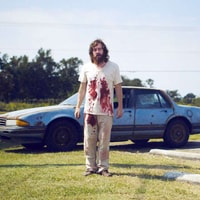
Speaker B:And even when he accomplishes his goal by the end of the movie, it's not as if you feel like I did something right or I'm a hero here because it ends up that the person who killed his parents died of cancer long ago, like years ago. Like so there was really nothing to be done other than survive in this entire movie. And I also kind of admire the fact that after he has that first kill, it's not clean, right? It's not right away. And he walks out and he's got. Wearing a white shirt and he's just covered in blood. Like just so much blood it almost seems impossible. And I love that, that it's not going to be something where. And now I'm just gonna sneak away. I've got, oh, I'm gonna steal the limo. Oh, there's a kid in the back seat that I gotta deal with now. Like it's just one thing after another that if you have, if you don't have a plan, because he doesn't. His plan is like, I'm gonna track this guy to the bar and stab him. I guess like wherever they end up, that's where I'm going to end up. I'm just going to follow them. So because he has no plan and because he doesn't have the skills to enact a plan even if he did have one, this is not going to
Speaker D:go well for you.
Speaker B:And, and honestly, if you survive this at all, you should count yourself lucky like this. This is probably a suicide mission because this family apparently just has an armory at every house they go to. So you are out, outmanned, outgunned, all those things. Yes, absolutely.
Speaker C:I'd kill to see Dwight making Blair's character in like a one battle after another scenario.
Speaker B:Yeah.
Speaker C:Would be really funny. I think that just because like, you know, there is an element to not say that those are interchangeable films. They're very much not. But there is an element to Dwight as that is very Bob ask. Like, am I forgetting his name or is it Bob?
Speaker B:That's Bob.
Speaker C:Yeah. I thought it was Bob. There's an element to him that is Bob esque where it's like you don't necessarily have these skills, but Bob's a revolutionary. This guy's just a guy and he doesn't really know how to operate a gun. Like we. Every single scene in which he, he is in any kind of confrontation, not even confrontation, interaction. He seems uncomfortable in that interaction. And maybe that's because of the characterization of Dwight that he, you know, is living out of his, out of a car. Whether it's his car is like besides the point. It's just he is finding cars and places to sleep at the beginning of the film. So he's not accustomed to a lot of interaction. But there's, there's a scene where he is, I believe in a gas station or like a, like, like a little corner store of some kind and he hands over a wad of money to the cashier and, and one of the bills is really bloody and he doesn't normally. Again, we keep talking about how it's such a. It's a very smart deconstruction and send up. But like I can see another film where the guy just stares him down with, you know, like a deadly glare and is like, like don't ask a question.
Speaker B:Right.
Speaker C:Just take the money. But making Blair's like, oh, yeah, that's. And he never says anything. Like, he, he is not quick. He is not quick enough to be like. That's why he's not ever quick enough to be like, yeah, this is why my white shirt is completely drenched in blood. The fact that he has the wherewithal to sneak out of the hospital after he's been treated and his knee has been stitched up is a, like, the most brilliant thing he's ever done in his life. It's. It's just.
Speaker A:It's a.
Speaker C:It's a really, really great character and, And a perfect protagonist for this kind of movie. And I'd love. I don't actually know. I believe it's called October, Sonier's next film, or at least what seems to be coming next. But it is a fugitive thriller set during Halloween. I guess the plot is tva, but he wrote and directed it. It's. It's got a bu. Cast of young actors still. There are plenty of people that have featured or at least appeared in his past works. I'm curious to see what kind of project that is, just because I'm so used to him doing the unexpected.
Speaker A:Right.
Speaker C:Even if he's taking on a more straightforward story.
Speaker B:Yeah, absolutely. I also was just thinking about. I think it's when he's eating with his sister or might be before that. But he even says, like, I'm not used to this much talking, or I don't talk very often. Like, it's just. I love that, like, they just put it out there. Like, this is the type of movie that's going to be. This is not going to be a quippy hero who makes jokes. It's not an arnold from the 80s where it's, you know, you said you'd kill me last. I lied. We're not going to have that moment with this guy. We're just going to have. Just trying to stay upright really is the goal of this entire movie. Just, Just keep moving. And, you know, I, I think this is a much lesser movie. If he survives, I. I think this movie falls apart. I think the whole deconstruction goes away if he makes it out. Even if he makes it out injured. And I love, though, that he has kind of a moment of kindness as he's dying, like, telling him the keys are in the car, like, get out of here. Get out of this. Leave this family behind. Do something different. Because. Because this movie also does have something to say about that kind of intergenerational cycle of violence. Like when it's the only thing you know and the only thing you're taught. And there have been stories about this throughout human history, especially throughout American history. You know, you mentioned the hatfields and the McCoys. You've got, you know, these kind of families of criminals that like, they're raised with. This is okay. This is how we solve our problems. And when you're born into it, there's not much you can do unless you want to leave your family behind. And this kid has, I guess, an opportunity because everyone is dead, he can start over and he could try something new. Because you do get the feeling that this kid, as young as he is, like I say kid, it's not like he's like 11, like he's a little bit older. He's a teenager.
Speaker C:So about 17 or 18 year olds.
Speaker B:Yeah. So you can kind of start a life and like do something different than what your family did. And I also like that the movie doesn't tell you if it works or not. No, we don't really know. We don't know what happens after this. We can only do so much. We can only offer you the keys. We cannot drive you to safety. All we can do is give you the opportunity. And I, I think this movie does a really good job of all of that. And I already mentioned the postcard, but I think it's like the perfect button.
Speaker C:No, exactly.
Speaker B:Movie that, like, all your best laid plans, if you don't actually know what you're doing, aren't going to really help you. The only person who really is effective in this movie is his friend from high school who is practiced with weapons. And those scenes are hard to watch. Like, there's a. There's not that much violence in this movie. But that moment of gore with that man face destroyed by that weapon, I. And I think it is purposeful. It's not just to have a cool moment of violence. It's to really show you, like, brother, you don't know this life. You don't know what you're getting into. This is what it looks like when you enact revenge and violence. Bodies are mangled and destroyed. You're not coming back from this. It's not like in the movies. You don't get a clean headshot. They don't fall off a cliff. You got to deal with the emotional and the physical wreckage that these instruments of murder and violence give you. And I love that. It just kind of puts you out there and like, yeah, this is what. This is where you end up. Are you sure you want to go down this path. Is vengeance really worth it? And I think at the end of the movie, the, the movie leaves it up to you, but to me, I'm walking away from this like, yeah, you know what, What? Maybe just walk away from this and get a job. Stop living on the beach, you bum. Like, live your life. Jesus Christ. And it, And I love the fact they don't belabor the point, but it's very clear that the death of his parents is what set him on this path where he's like, I just can't function. And I like that we have the, the example of the sister that it's not the same for everybody. Maybe he can't, but she managed to function. She's got kids, she's got responsibilities. She manages to get it done. And I like the fact that we have these, these, these two looks at what this type of trauma can do. Some of us cannot function and others of us find a way. Maybe if he had some therapy, maybe that would have helped him out a little bit and so he could try to move forward instead of being, you know, it seemed like. It's not like he was thinking about this every day, all day, but once that newspaper was in his face, once he found out that that man was free, it was like, like he made that split second decision and that was it. And that is not a healthy way to go through life. To just be like, yep, I gotta do this. There's no talking me out of this. There's no way around it.
Speaker C:Yeah, you said it. The, the postcard in and of itself is like a great little Chekhov's postcard almost, but it's, we do see it, obviously, but it's the fact that he is so non functional or unable to function that he doesn't recognize a postcard. Takes a. Yeah, that's, that is enough to characterize who we're dealing with. But it's, it's a, it's a great point. Like he was very clearly set off by the parent, by the death of his parents in the brutal way that they were killed, that he removed himself from, from the world. For all intents and purposes, people around him moved on, want. He moved away. And the only thing that brings him back to the world that he once knew, the only thing that makes him shave and put on a button up shirt is the fact that the person who he thought killed his parents was being released from prison. And then all of that goes awry. And the things you thought to be true are very much sometimes not. And he doesn't know how to deal with that either. And I mean, you said it. Ben, who has played by. I want to say his name is Devin Rattray. He is another guy who is in these movies that you're just like, I know him something.
Speaker B:Right, right. Yeah, absolutely.
Speaker C:His presence is, is maybe the most unsettling in the entire film. Even beyond the Hatsfield fan, like the, the Cleveland family. Because he's just like, you can't really get a good read on him. He's like, here's your gun. I was just with you. I'm gonna call the cops. It's like, what?
Speaker B:Yeah.
Speaker C:What's going on here?
Speaker B:Very unnerving performance. Yeah, absolutely. And I love, you know, you mentioned, like, you know, finding out the truth. Like, not only do we find out that that guy didn't actually kill his parents, but also that his own mom was cheating with the, with the killer. Like, and all this stuff gets revealed. And I. It's another thing I love about Blair's performance. You can see him. You can actively see him processing this information and kind being able to. And I, I kind of love that because like any of us, if we're given information that is contrary to everything that we believed, we're not immediately going to go, okay, cool. Going to kill you anyway. Like, that's not really the way it's going to go. Like, it's going to throw you for a loop. And that is the best description of this movie when I'm watching it. It throws you for a loop. It never lets you relax because he is never relaxed because he is not prepared enough to relax at any point in this story.
Speaker C:Yeah, couldn't agree more.
Speaker B:So, all right, all right.
Speaker C:So forever.
Speaker B:So next week, Will. It's a big week. It's a really big week next week. So I Want yout Sex is coming out. Greg Arske, one of our great queer directors. You should watch all of his movies. They're all very entertaining. So that is a movie about someone who finds their mute.
Speaker A:So I.
Speaker B:We wanted a queer story about a muse. So we are finally gonna watch Portrait of a Lady on Fire. It's Will's gonna Cry. Tune in next week. It's gonna be great. So Will, until then, where can they find you online? Anything you're working on, tell. Tell the people what you're doing.
Speaker C:You can find me online at. By willbrnr on Twitter and will be on our letterboxd. You can find my work on sites like In Session and Geek Vibes Nation. I will have a review of Jackass Best and Last coming out in the next couple of days from when we're recording. So it'll be out by the time this is out. Very much so. Looking for that, you know, really we talked about Minions and Monsters a few weeks back, but Jackass Best and Last is really the homage to the history of cinema. If you really think let's go and I will not and I will not allow.
Speaker A:Right.
Speaker C:So yeah, you could that. I'm looking forward to watching that and many, many other things. Portrait of a Lady on Fire included. I will cry. Dave, where can they find you and where can they find the show?
Speaker B:They can find the show at Pop Case Study. You can find me at Darn that Dave on every social media. If things go well, there will be a review of I want your sex coming from me at in session, but that's all a matter of. So if the production company wants to get me a screener, then it will happen. If not, I will give it to someone else because I'm an art editor.
Speaker A:Like that.
Speaker B:That's a great question. I get all these PR emails, so I just send back hey, please. Hello. So hopefully there'll be that. If not, there'll be a bunch of other stuff either at In Session or at Geek Vibes Nation, but just follow me at Darn that Dave. Twitter, Instagram, letterboxd, wherever. Please feel free. So until next time when we talk about Portrait of a Lady on Fire, we will be here diagnosing your favorites and judging you for what you watch.
Speaker A:But to me, it's just a stereotype and it makes us lose our sights. The portrait of. Of authority. Portrait of Authority. You tell me that's what I'm supposed to be. Portrait of Authority.
Episode Notes
This week, we get Alan Ritchson (Jack Reacher) absolutely wrecking shop in MOTOR CITY. We talk listening to authority and ineffective action heroes in BLUE RUIN!
Find out more at https://pop-culture-case-study.pinecast.co